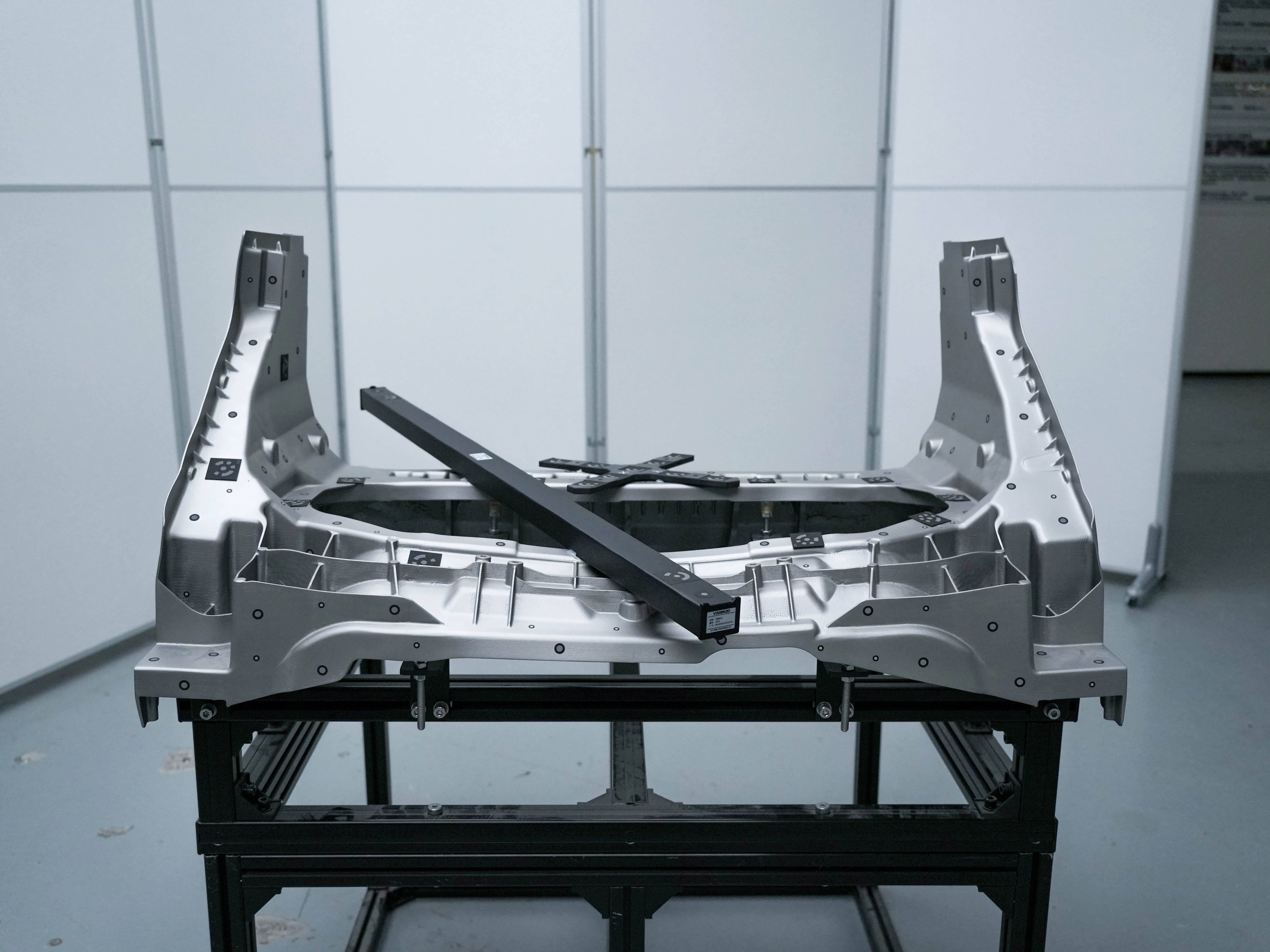
BIW Flush and Gap Measurement: A Systematic Upgrade from "Measurable" to "Accurate, Comprehensive, and Decision-Ready"
A consensus has steadily formed within the automotive manufacturing industry: perceived exterior quality directly influences a user’s first judgment of a vehicle. Simply put, the overall quality of a vehicle, as perceived through a user's most intuitive visual and tactile experiences, can determine their initial impression of whether the car is "premium" or not within just a few seconds.
Among all exterior elements, flush and gap is often the first to be noticed and the easiest to amplify as a quality signal. It not only affects the refinement and perceived quality of the entire vehicle but also directly impacts body sealing, wind noise levels, and riding comfort.
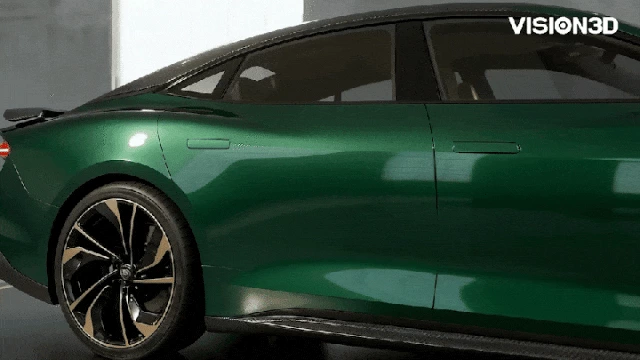
Flush and gap is no longer just an aesthetic issue; it is a critical manifestation of vehicle manufacturing capability. Because of this, automakers are continuously tightening their control standards for flush and gap. The continuous tightening of these standards essentially raises the requirements for measurement accuracy, stability, and consistency on the manufacturing side.
01. Why is it Difficult to "Measure Well" During the BIW Stage?
From a results perspective, flush and gap seems like a simple dimensional index. However, in actual production—especially during the Body-in-White (BIW) stage—achieving accurate, comprehensive, and stable measurements has always been an industry challenge. The core reasons lie in three areas: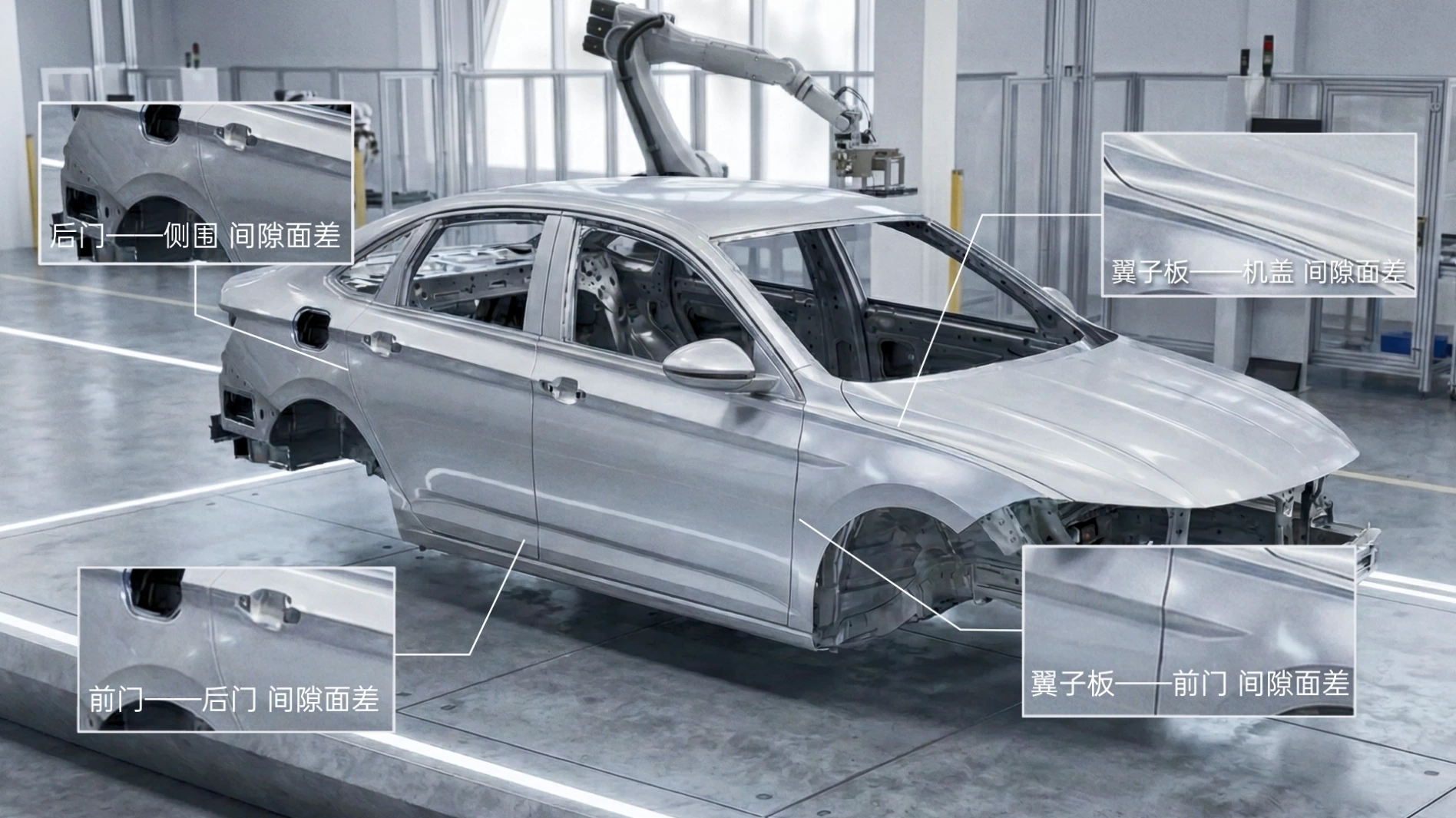
-
Complex Features & High Point Density: BIW flush and gap features come in numerous types and are distributed across different locations and complex curved surfaces. With many measurement points and intricate features, a single measurement method can hardly achieve systematic coverage.
-
High Sensitivity to Methods: The BIW is in a semi-finished state and is highly sensitive to measurement methods. During this stage, surfaces vary significantly and local rigidity is insufficient. Consequently, measurement results are extremely sensitive to the measurement posture, reference baselines, and method selection, making consistency and repeatability difficult to guarantee.
-
Delayed Detection: Traditional measurement solutions widely used today, such as feeler gauges and line lasers, can usually only perform result detection on visible flush and gaps after the closure panels (doors, hoods, tailgates) have been assembled.
The Core Pain Point: For a large number of unassembled areas in the BIW stage, traditional methods cannot effectively capture local datum features, such as assembly interface relationships and potential gap risk sources. This means traditional solutions focus on discovering problems post-assembly rather than enabling system-level inspection control and process feed-forward adjustments during the welding stage.
Comparison of Traditional Measurement Methods
| Method | Accuracy | Efficiency | Applicable Scenario | Characteristics |
| Feeler Gauge | 0.1 mm | Extremely Low | Offline small-batch sampling | Manual operation results in low efficiency, large errors, and difficulty in ensuring consistency and accuracy. |
| Handheld Laser Gauge | 0.05 mm | Low | Offline inspection / Critical part re-measurement | Struggle with diverse gap types; low inspection efficiency; cannot achieve full inspection on automated lines. Poor data stability on reflective or dark surfaces. |
| Automated Line Laser Tracker | 0.05 mm | Medium | Online static / Trailing full inspection | Point cloud density is sparse, limiting measurement accuracy. Cannot measure the dimensions of exterior parts relative to local datums when closures are not installed, making it difficult to support pre-assembly judgments. |
02. Upgrading Measurement Logic: From Result Inspection to Process Control
Since flush and gap has become a key indicator of perceived exterior quality, measurement should not stop at mere sampling or post-mortem judgment.
VISION3D’s core approach to solving this problem is applied directly to the BIW stage: we aim not only to measure flush and gap but also to cover as many inspectable items as possible before the closures are assembled. This allows for the early identification of potential risks, preventing issues from flowing into the assembly and subsequent stages.
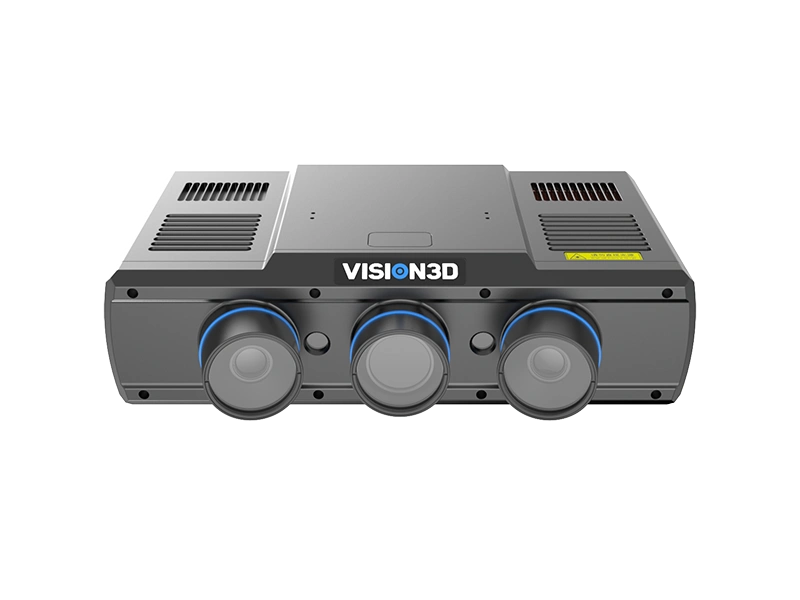
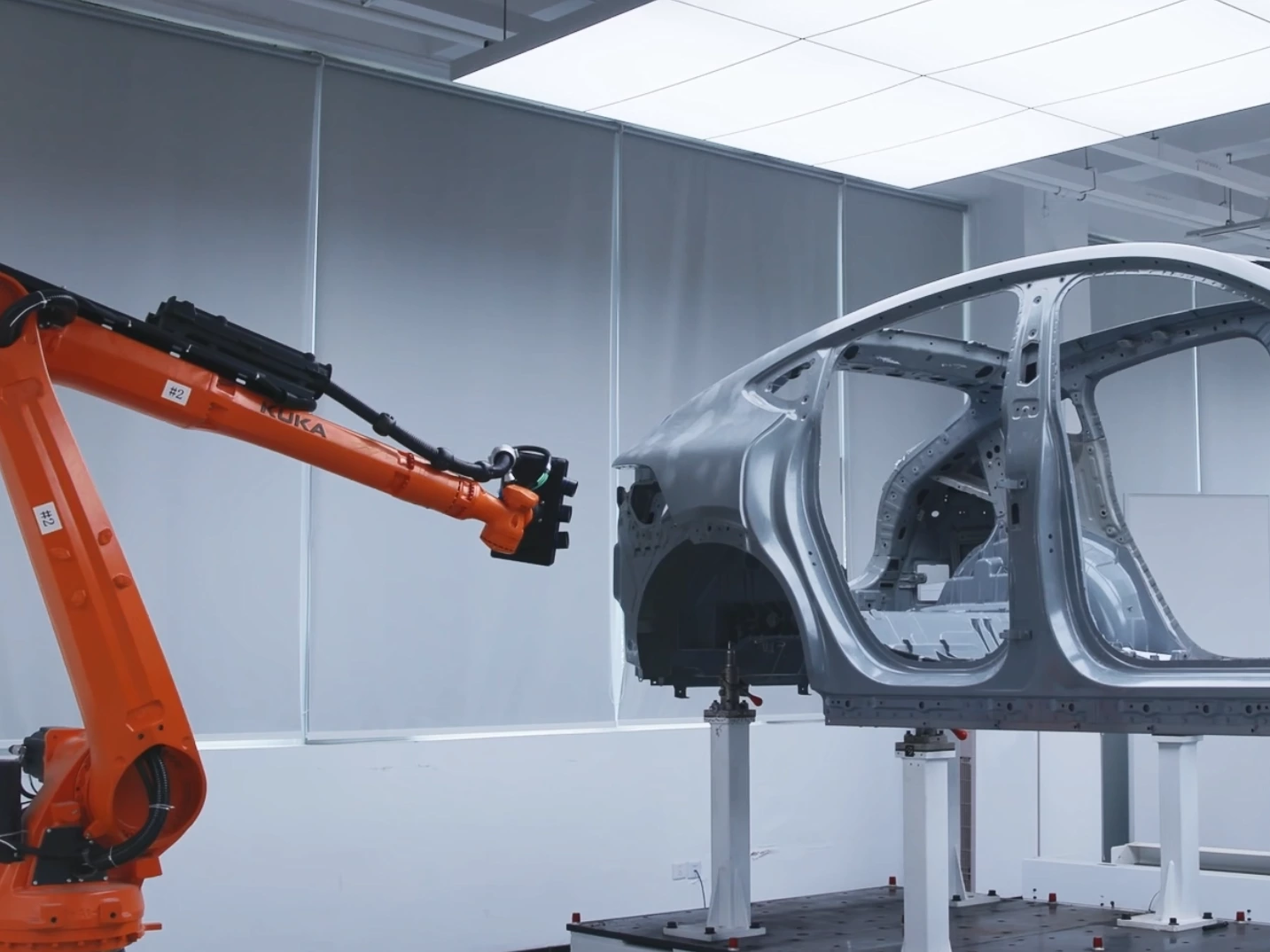
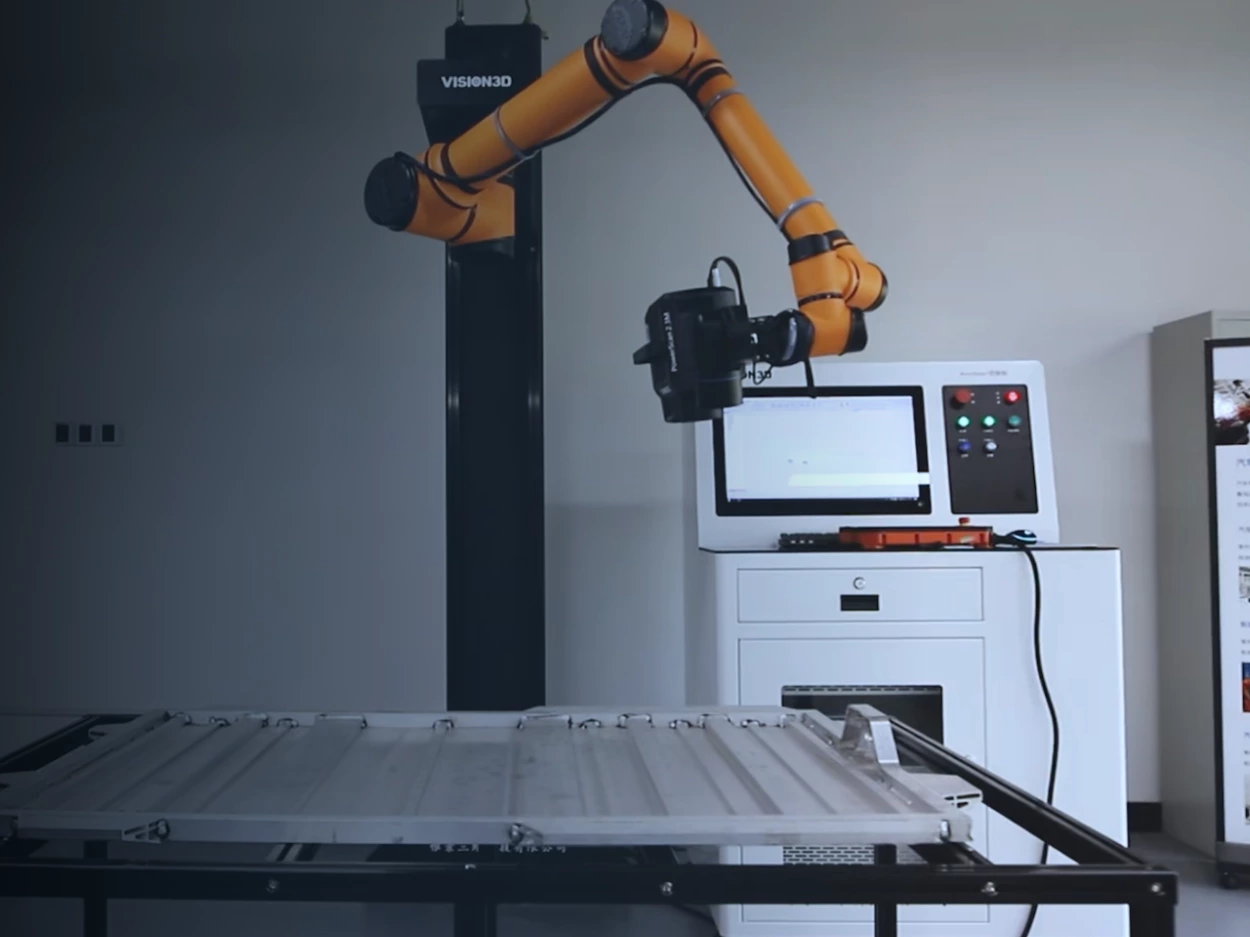
Based on this philosophy, VISION3D has developed a 3D flush and gap measurement solution based on blue-light area structured light technology tailored for BIW application scenarios. This solution spans both the welding and final assembly stages, creating a complete data closed-loop.
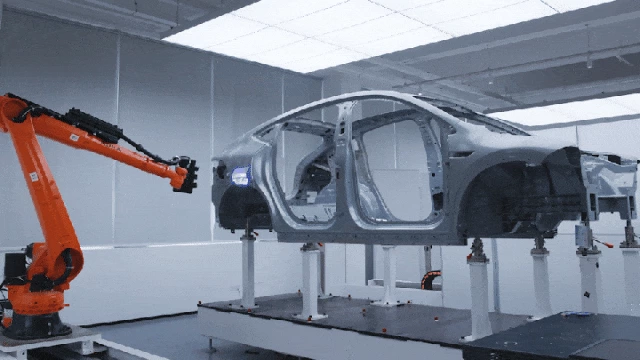
VISION3D Area Structured Light Flush & Gap Measurement Solution
—— Three Core Capabilities to Build a Traceable Data System
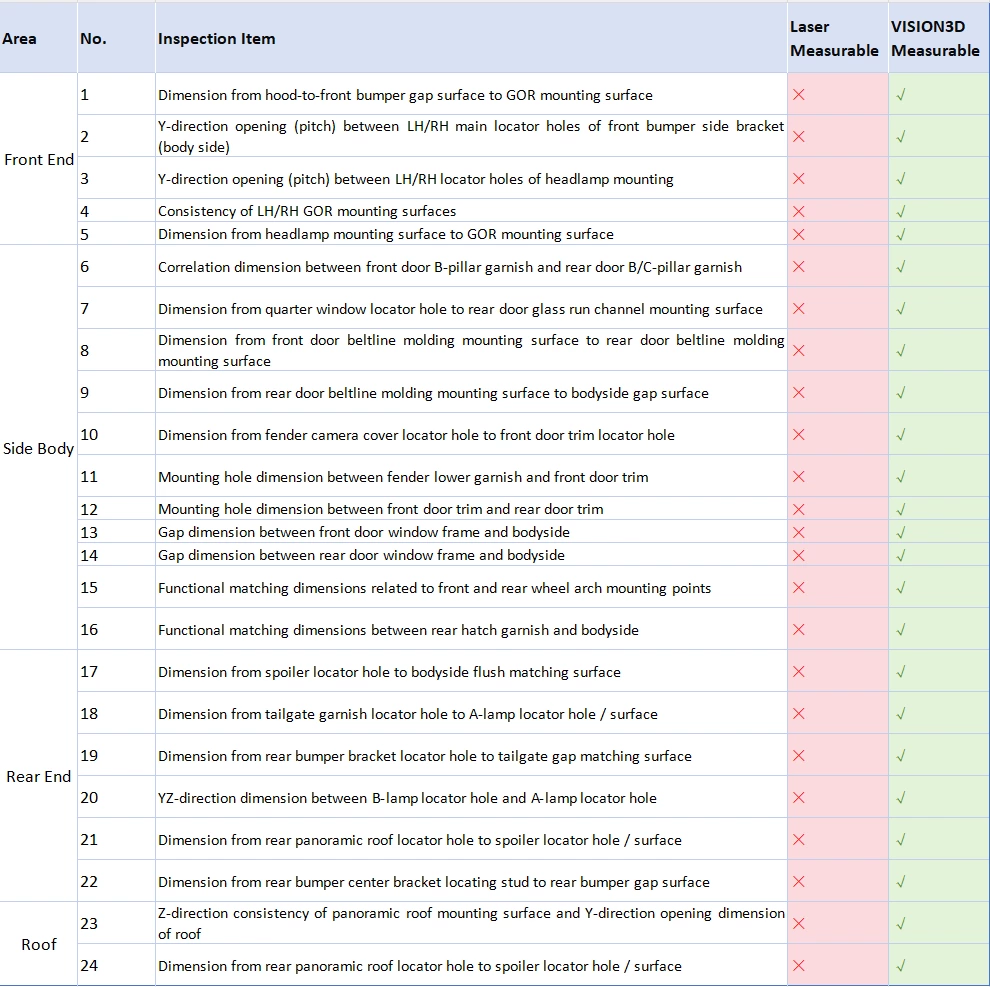
1. Covering More Inspectable Items: Moving Risk Discovery Forward
Unlike traditional feeler gauges and line lasers—which use relative measurement methods and can only obtain isolated, scattered results—VISION3D’s automated blue-light 3D measurement utilizes an absolute measurement method based on a global coordinate system. This not only accurately measures flush and gap but also covers key assembly features of the BIW before closures are mounted, enabling early evaluation of more inspectable items.
-
Unified Coordinate System: During measurement, the system anchors every scan result into the same 3D coordinate system, ensuring that all measurement data possesses a consistent and stable spatial reference.
-
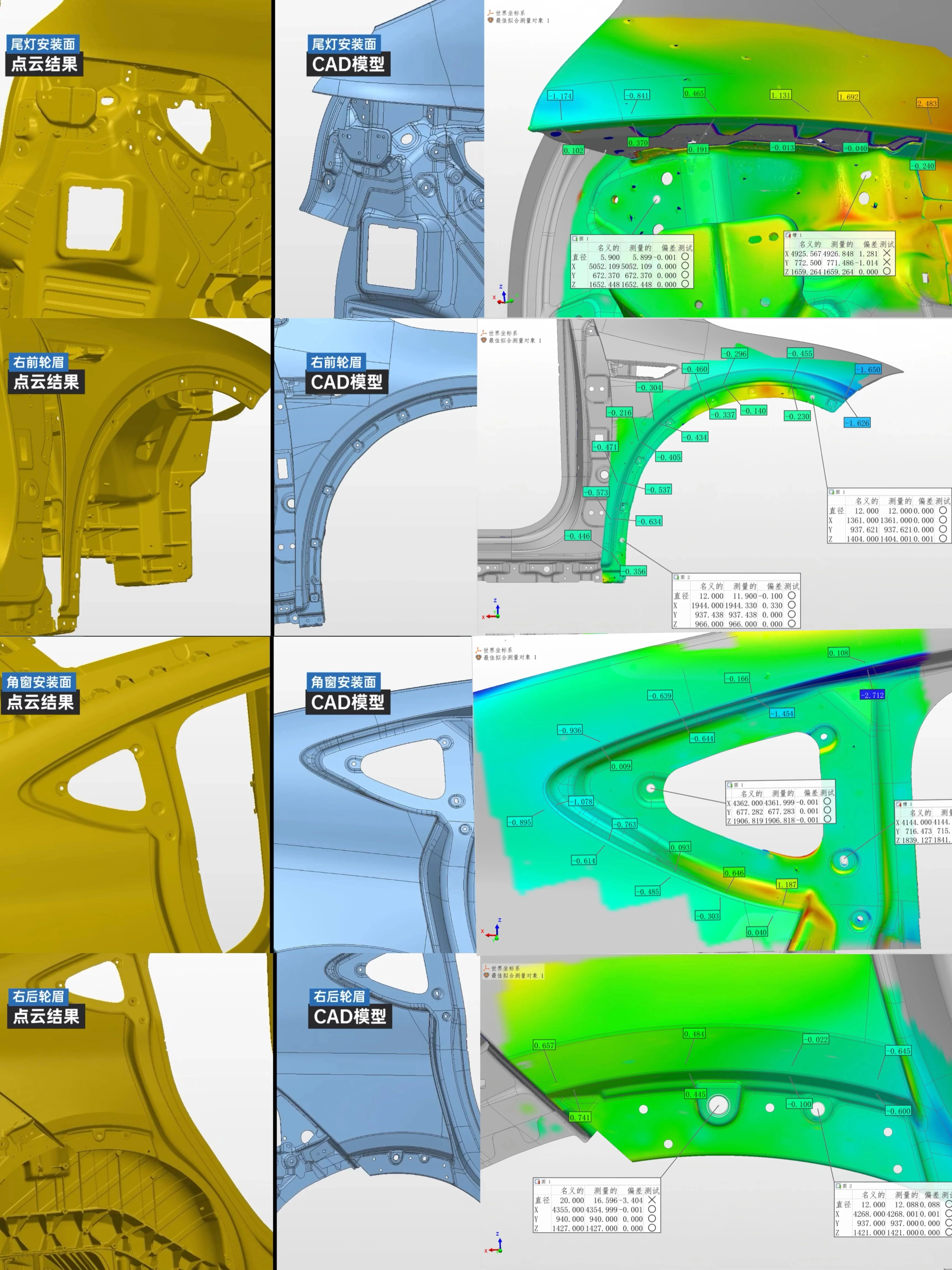
Virtual Assembly Simulation: On this basis, the system can first measure the critical local datum features of the BIW (such as mounting holes, surfaces, edges, and other assembly interface areas). It then performs a virtual assembly simulation of the closures based on the relative positions of these local datums.
-
Risk Prevention: By comparing the simulation with the nominal CAD design model, the system accurately quantifies local datum deviations. This eliminates misjudgments and cumulative errors caused by reference variations, helps detect potential flush and gap risks in advance, and prevents problems from being carried into subsequent processes—fundamentally guaranteeing subsequent assembly consistency and overall precision.
2. More Stable and Comprehensive Measurement Capabilities
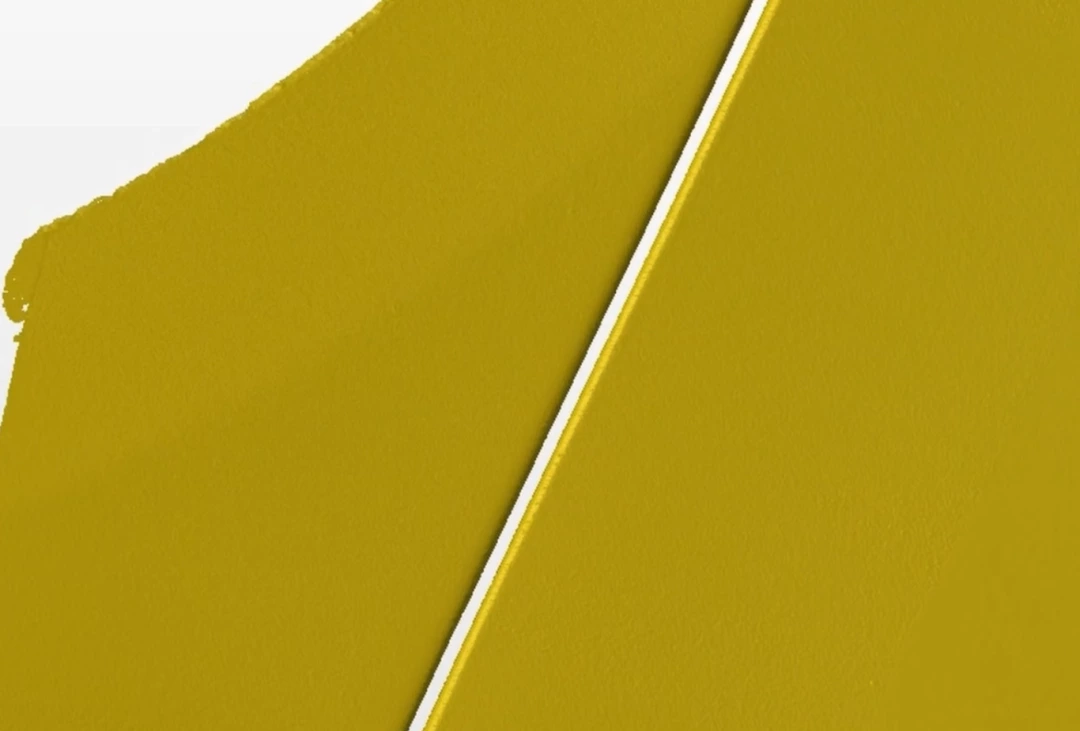
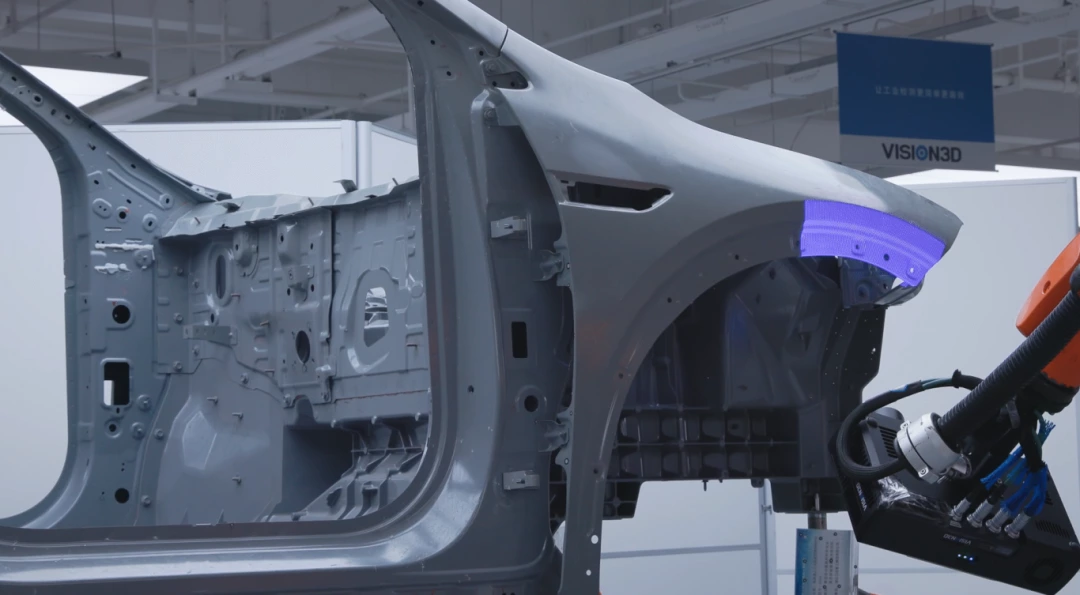
VISION3D employs a blue-light area structured light sensor for measurement. Compared to traditional line laser methods, the area structured light solution offers higher accuracy and stability in BIW scenarios.
-
High Repeatability: In flush and gap measurements, its repeatability accuracy reaches 90% < 0.10 mm, fully meeting the increasingly stringent flush and gap control requirements of mainstream and high-end vehicle models.
-
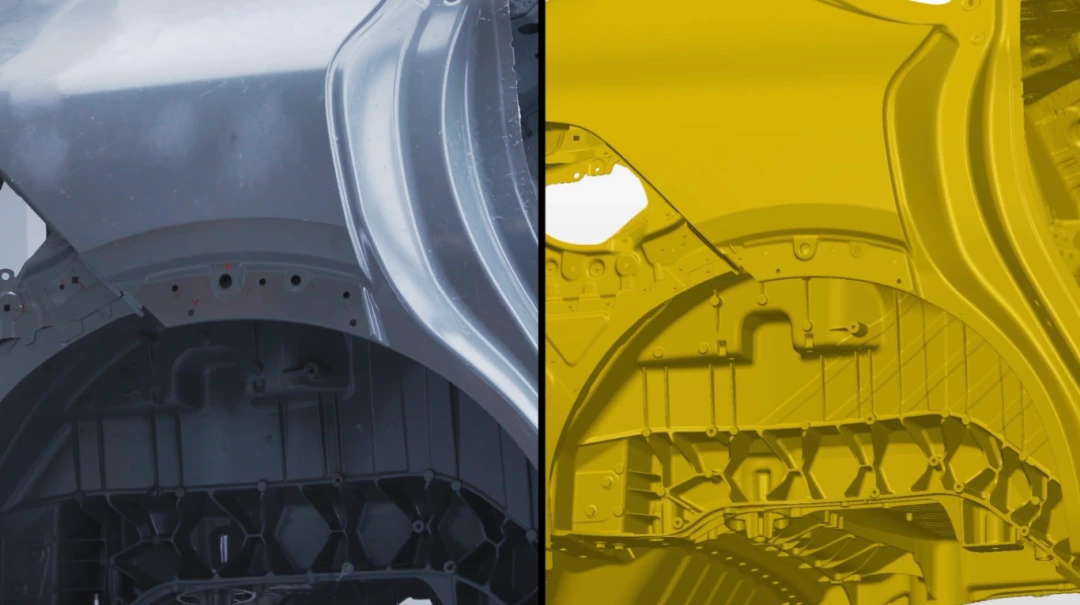
Feature Expansion: Crucially, the capability of blue-light area structured light is not limited to the gaps themselves. It can also stably capture point cloud data of complex structures, such as thin-walled sheet metal holes and multi-feature combined areas, further expanding the scope of inspectable items that traditional line laser solutions struggle to cover.
3. Constructing a Traceable Data Chain from Welding to Final Assembly
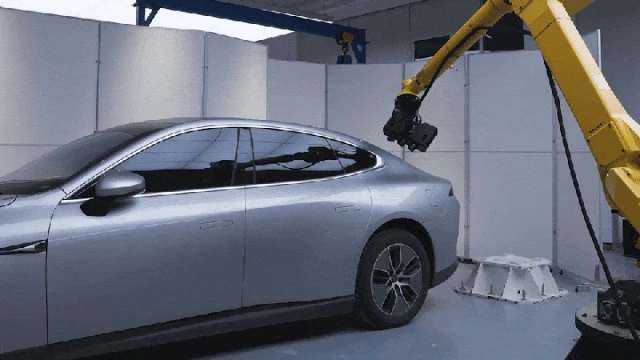
Leveraging high-precision measurement capabilities and a unified absolute coordinate system, VISION3D extends flush and gap measurement from a single process into a digitized quality management process that spans both welding and final assembly.
-
High-Speed Online Inspection: Upon entering the final assembly stage, the system supports high-speed online inspection. The processing time for a single frame of data is under 1.8 seconds, and a 150-viewpoint measurement takes just 270 seconds. This enables non-contact, 100% full inspection of critical gaps like the "four doors and two lids," improving accuracy while minimizing the impact on painted surfaces and flexible parts.
-
Statistical Process Control (SPC): Through automated full inspection, the system performs statistical trend analysis (SPC) on batch vehicle data to detect abnormal fluctuations in real time.
-
Process Feed-Forward & Closed-Loop: The measurement results are fed forward into the process decision-making and adjustment workflows for critical components like doors and lids, reducing the recurrence of rework and repairs from the source. At the same time, this data can be integrated into the factory's MES system, achieving a complete closed-loop from measurement to feed-forward decision-making, repair management, and quality traceability.
Conclusion
By introducing high-precision measurement methods, a unified absolute reference baseline, and a data architecture that bridges manufacturing stages, VISION3D successfully integrates perceived exterior quality into a quantifiable, analyzable, and continuously optimizable manufacturing ecosystem.