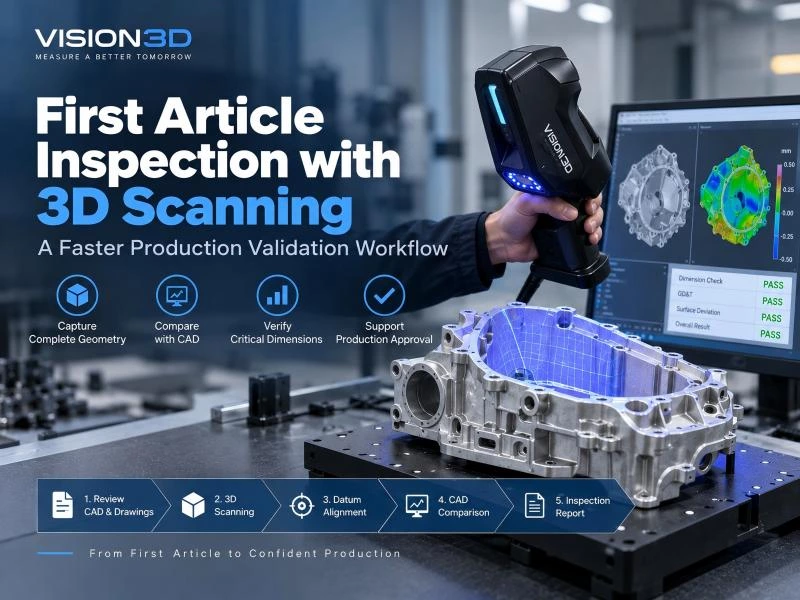
How does a 3D scanner work?
3D scanning technology has become an essential part of modern manufacturing, quality inspection, reverse engineering, and product development. From automotive production lines to aerospace component inspection, industrial 3D scanners help manufacturers capture accurate digital data faster and more efficiently than traditional measurement methods.
Unlike manual measurement tools, a 3D scanner can quickly collect millions of measurement points from a physical object and convert them into highly accurate digital models. This allows manufacturers to improve inspection speed, reduce production errors, support automated quality control, and accelerate product development.
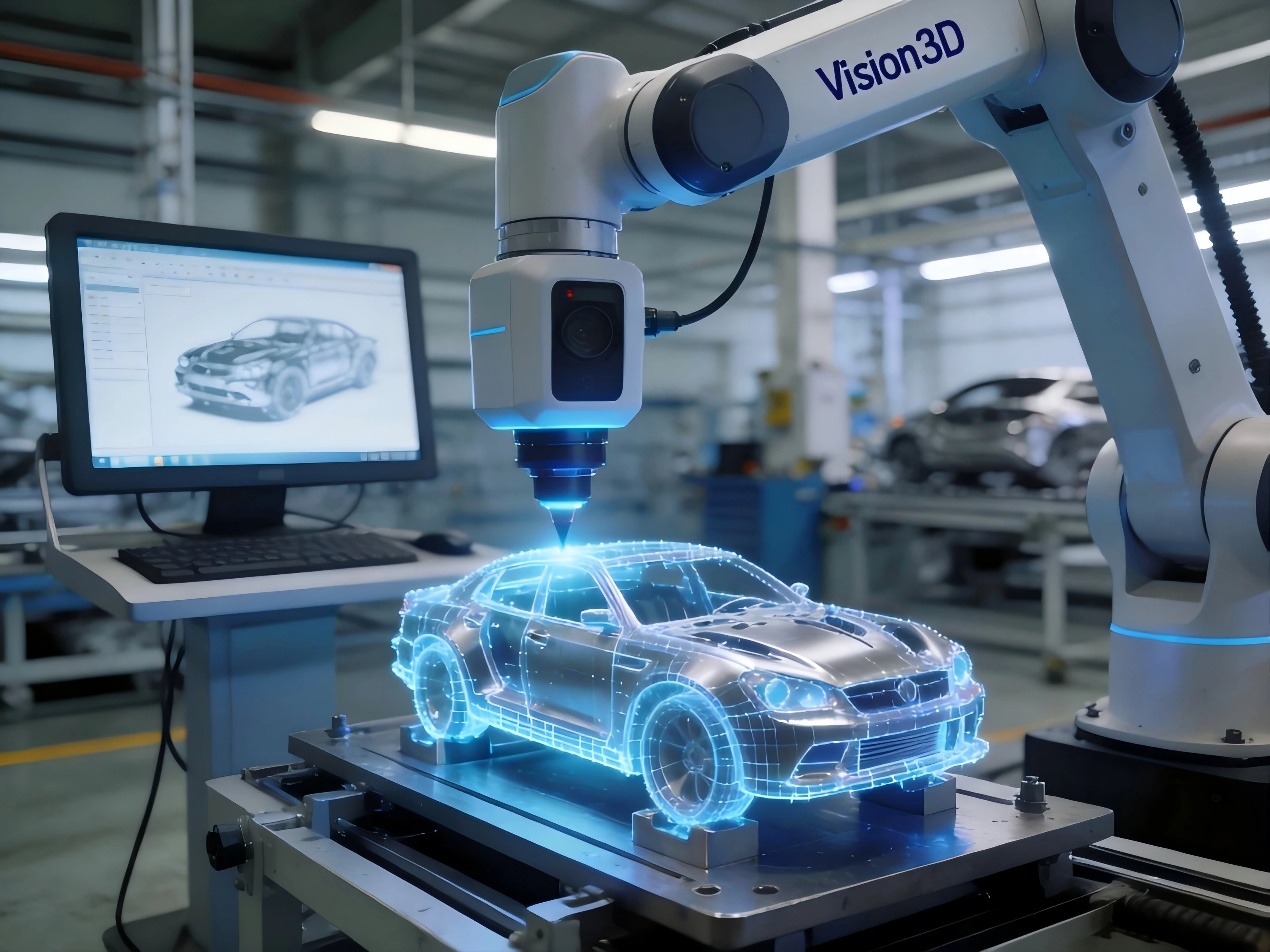
oday, industrial 3D scanning systems are widely used for:
- Dimensional inspection
- Reverse engineering
- CAD comparison
- Automated quality control
- Surface analysis
- Digital manufacturing
- Product development
- Inline inspection systems
In this article, we explain how a 3D scanner works, the different types of 3D scanning technologies, and how industrial manufacturers use advanced optical metrology systems to improve quality and production efficiency.
What Is a 3D Scanner?
A 3D scanner is a non-contact measurement device that captures the shape, dimensions, and surface geometry of a physical object and converts the information into digital 3D data.
Industrial 3D scanners typically generate:
- Point cloud data
- Polygon mesh models
- CAD-compatible digital models
- Inspection reports
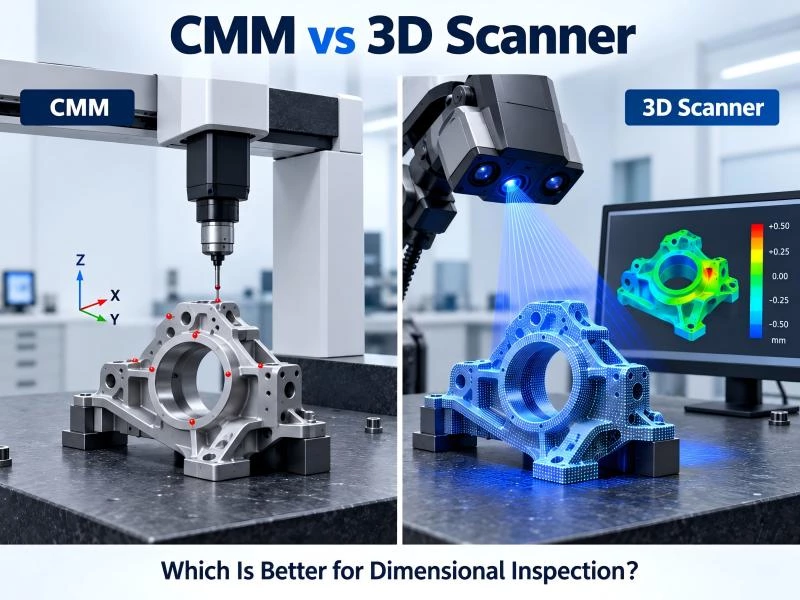
Compared with traditional manual measurement tools such as calipers or coordinate measuring machines (CMMs), industrial 3D scanning systems offer several advantages:
- Faster data acquisition
- Full-field measurement
- High accuracy and repeatability
- Non-contact measurement
- Better efficiency for complex surfaces
- Support for automation and intelligent manufacturing
Modern optical 3D scanners are widely used in automotive manufacturing, aerospace inspection, rail transit, electronics production, heavy industry, mold manufacturing, and additive manufacturing.
How Does a 3D Scanner Work?
Industrial 3D scanners work by projecting light or laser patterns onto an object and capturing how those patterns deform across the surface. Advanced software then calculates the exact 3D coordinates of the object to generate a digital model.
Although different scanning technologies use different methods, most industrial 3D scanners follow a similar workflow.
Step 1: Projecting Structured Light or Laser Patterns
Most industrial optical scanners use either:
- Structured light scanning
- Blue light scanning
- Laser triangulation scanning
The scanner projects light patterns or laser lines onto the object surface.
Structured light 3D scanners often project stripe patterns, while laser scanners project laser lines across the object.
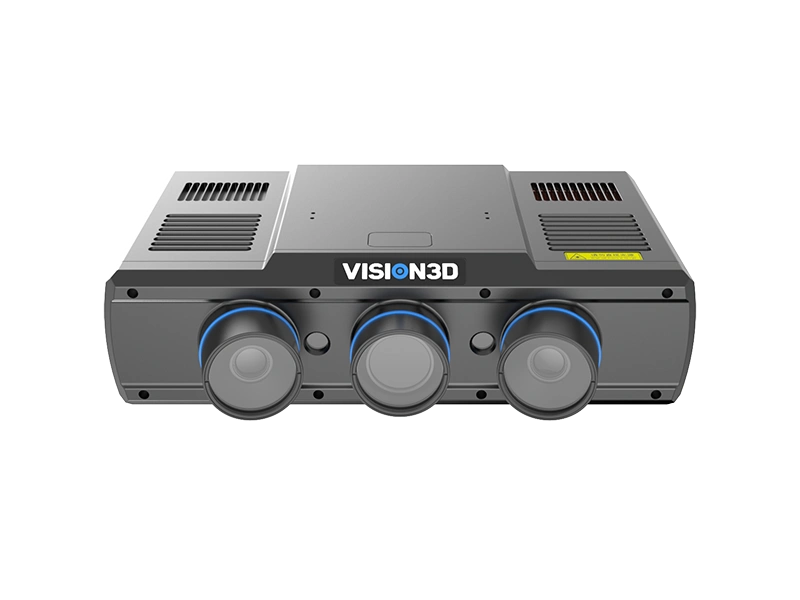
For example, the PowerScan Series from Vision3D uses advanced optical scanning technology for industrial inspection and reverse engineering applications. Popular models include PowerScan 5M Pro, PowerScan 12M Pro, PowerScan H, and PowerScan T.
These systems are designed for high-speed industrial 3D measurement, portable inspection, and complex surface scanning.
Step 2: Capturing Surface Deformation
The scanner’s cameras capture how the projected light patterns deform when they hit the object surface.
This is one of the most important principles behind optical 3D scanning technology.
The system does not simply take a photograph. Instead, it analyzes how the projected patterns change across different shapes, curves, edges, and surface features.
High-resolution industrial cameras record the deformation information from multiple angles to ensure accurate surface reconstruction.
Step 3: Calculating 3D Coordinates Through Triangulation
Industrial 3D scanners use triangulation algorithms to calculate the exact position of each point on the object surface.
The scanner already knows:
- The position of the projector
- The position of the cameras
- The projection angle
- The camera viewing angle
Using this information, the software calculates the X, Y, and Z coordinates of millions of points.
This process creates a dense point cloud that represents the object’s geometry.
Step 4: Generating the Digital 3D Model
After the point cloud is captured, the software converts the data into:
- Polygon mesh models
- Surface models
- CAD comparison data
- Inspection reports
- Reverse engineering files
Industrial metrology software also supports:
- GD&T inspection
- Deviation analysis
- Surface analysis
- Dimensional measurement
- Automated reporting
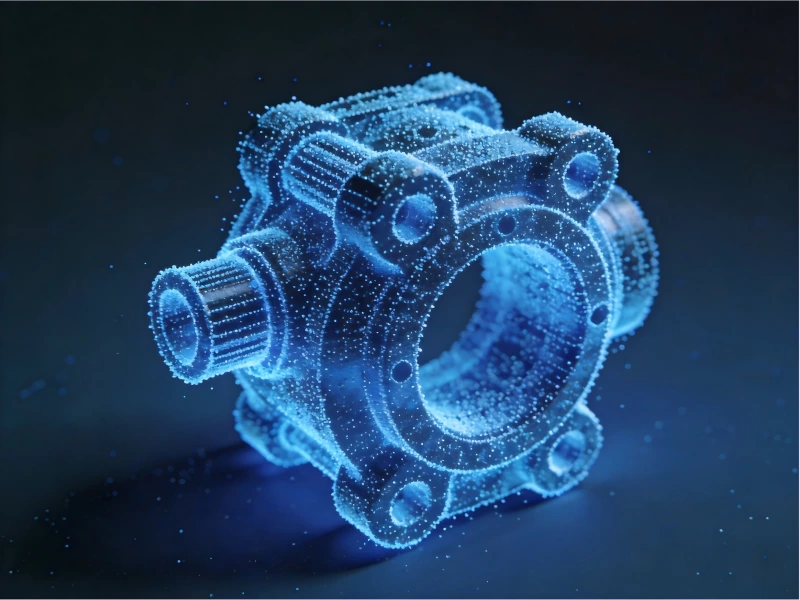
Vision3D provides integrated inspection and metrology software solutions for industrial applications, including VisionInspect, DataSight, and iPlan.
These software platforms help manufacturers manage inspection workflows, analyze measurement data, and support automated quality control systems.
Types of Industrial 3D Scanning Technologies
Different industrial applications require different types of 3D scanning technologies. Understanding the differences between scanning methods helps manufacturers choose the right system for their inspection requirements.
Structured Light 3D Scanning
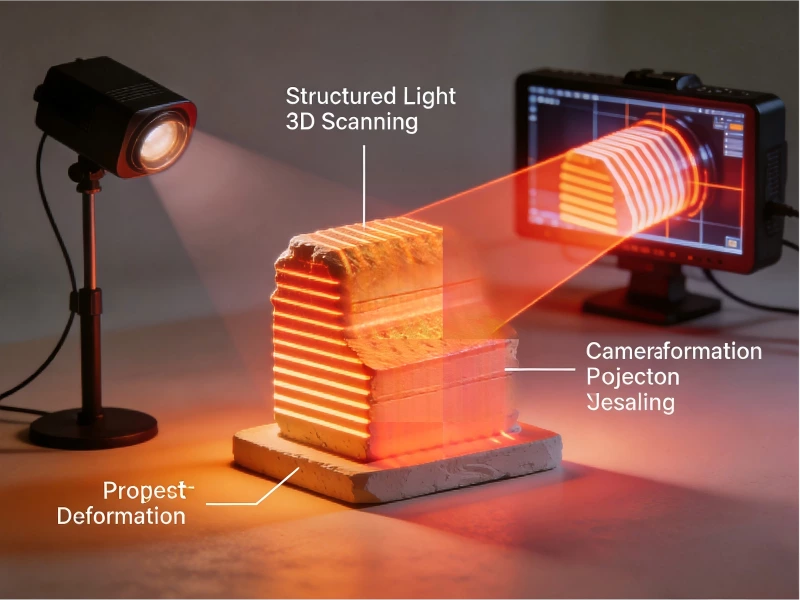
Structured light scanning projects patterned light onto an object surface and uses cameras to analyze the deformation of the patterns.
Advantages of structured light 3D scanning include:
- High measurement accuracy
- Fast scanning speed
- Excellent surface detail capture
- Ideal for industrial metrology
- Suitable for automation systems
Structured light scanners are widely used in:
- Automotive inspection
- Aerospace manufacturing
- Precision component inspection
- Reverse engineering
- Mold and die measurement
The AutoScan Series from Vision3D is designed for industrial structured light scanning and automated measurement applications. Models such as AutoScan 500, AutoScan 1000, AutoScan 2000, AutoScan 5000, AutoScan M, and AutoScan H support high-precision industrial inspection and full-field optical metrology.
Laser 3D Scanning
Laser 3D scanners project laser lines onto an object and calculate 3D coordinates using laser triangulation.
Laser scanners are commonly used for:
- Large object scanning
- Complex surface measurement
- Reverse engineering
- Industrial equipment inspection
- Dark or reflective surfaces
Laser scanning technology is often preferred for applications requiring portability and flexible scanning environments.
Photogrammetry
Photogrammetry creates 3D models by analyzing multiple photographs taken from different angles.
Compared with industrial structured light systems, photogrammetry is generally less accurate and slower for industrial inspection, but remains useful for architecture, cultural heritage preservation, and large-scale digital modeling.
LiDAR and Time-of-Flight Scanning
LiDAR and time-of-flight scanning technologies measure distance by calculating how long it takes light signals to return from an object.
These technologies are commonly used for construction projects, infrastructure inspection, large-area mapping, and autonomous systems.
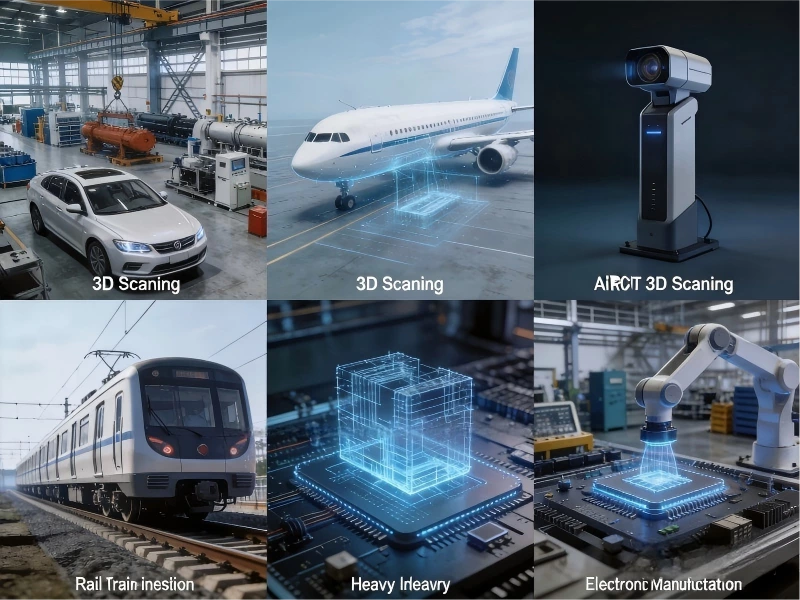
Industrial Applications of 3D Scanners
Automotive Manufacturing
Automotive manufacturers use 3D scanners for body-in-white inspection, gap and flush measurement, assembly inspection, sheet metal analysis, and reverse engineering.
Related solution page: Automotive 3D Inspection Solutions
Aerospace Inspection
Aerospace components require extremely high dimensional accuracy and strict quality control. Industrial 3D scanners support turbine blade inspection, composite part measurement, precision component inspection, and surface analysis.
Related solution page: Aerospace 3D Measurement Solutions
Rail Transit and Heavy Industry
Large industrial components often require portable and high-speed optical scanning systems for weld inspection, casting analysis, maintenance, and dimensional inspection.
Related solution page: Rail Transit and Heavy Industry Solutions
Electronics Manufacturing
Electronics manufacturers use high-precision optical measurement systems for PCB inspection, connector measurement, and precision assembly analysis.
Related solution page: Electronics Inspection Solutions
Portable and Handheld 3D Scanning Solutions
Portable and handheld 3D scanners provide greater flexibility for on-site inspection and large-part measurement.
The VScan M Series, including VScan M11 and VScan M17, supports portable industrial scanning workflows for reverse engineering, industrial maintenance, and flexible manufacturing environments.
High-Accuracy Optical Measurement Systems
For applications requiring ultra-high precision dimensional analysis, advanced optical metrology systems provide enhanced accuracy and stability.
Vision3D also offers advanced optical measurement solutions such as VMetric Optical Measurement System and VMetric 20M.
These systems are designed for large-scale dimensional measurement, aerospace inspection, assembly alignment, and production quality control.
Advantages of Industrial 3D Scanning
- Faster inspection speed
- Full-field data collection
- Non-contact measurement
- Improved quality control
- Better automation integration
- Enhanced reverse engineering
Industrial 3D scanners help manufacturers improve production efficiency, reduce manufacturing defects, and support intelligent manufacturing systems.
How to Choose the Right Industrial 3D Scanner
Selecting the right industrial 3D scanner depends on several factors:
- Part size
- Required accuracy
- Surface material
- Scanning environment
- Automation requirements
Vision3D provides multiple industrial 3D scanning and metrology solutions for different industries, applications, and inspection requirements.
The Future of Industrial 3D Scanning
As manufacturing continues moving toward Industry 4.0 and intelligent automation, industrial 3D scanning technology will continue evolving.
Future trends include AI-assisted inspection, automated inline metrology, smart factory integration, real-time quality monitoring, cloud-based measurement analysis, and digital twin manufacturing.
Conclusion
Industrial 3D scanners have transformed modern manufacturing by enabling fast, accurate, and non-contact measurement of complex components and assemblies.
By projecting structured light or laser patterns onto an object and analyzing the resulting deformation, 3D scanners generate highly accurate digital models that support inspection, reverse engineering, automation, and intelligent manufacturing.
From portable handheld scanners to automated structured light inspection systems, modern 3D scanning technology helps manufacturers improve efficiency, reduce errors, and accelerate product development.
Vision3D provides a wide range of industrial 3D scanning, optical metrology, and automated inspection solutions for industries including automotive, aerospace, electronics, rail transit, and heavy industry.
FAQ
How accurate are industrial 3D scanners?
Industrial 3D scanners can achieve very high measurement accuracy depending on the scanning technology, calibration system, and application requirements.
What is the difference between structured light and laser 3D scanning?
Structured light scanning projects patterned light onto an object surface, while laser scanning uses laser lines. Structured light systems are often preferred for high-speed industrial metrology applications.
Can 3D scanners scan shiny or dark surfaces?
Modern industrial 3D scanners can scan many challenging surfaces, although some reflective or transparent materials may require surface treatment or specialized scanning methods.
What industries use industrial 3D scanning?
Industrial 3D scanning is widely used in automotive manufacturing, aerospace, electronics, rail transit, heavy industry, mold manufacturing, and additive manufacturing.
Can a 3D scanner create CAD models?
Yes. Industrial 3D scanning systems can generate point cloud and mesh data that can be converted into CAD-compatible models for reverse engineering and product development.
What is industrial optical metrology?
Industrial optical metrology uses non-contact optical technologies such as structured light and laser scanning to perform high-accuracy dimensional measurement and quality inspection.