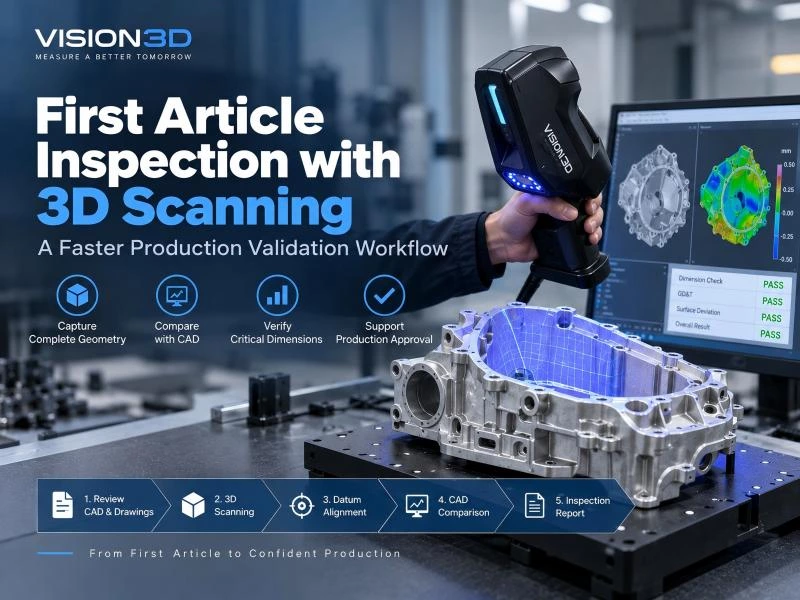
Structured Light 3D Scanning: How It Works, Advantages, and Industrial Applications
Structured light 3D scanning has become one of the most important technologies in modern industrial metrology, quality inspection, and reverse engineering. By projecting coded light patterns onto an object and analyzing how those patterns deform, this technology enables fast, accurate, and non-contact 3D measurement for complex components.
From automotive manufacturing and aerospace inspection to electronics and heavy industry, structured light scanning is widely used to improve production efficiency, reduce errors, and support automated quality control systems.
What Is Structured Light 3D Scanning?
Structured light 3D scanning is an optical measurement technology that captures the 3D shape of an object by projecting structured light patterns (such as stripes or grids) onto its surface and recording the deformation of these patterns using industrial cameras.
The result is a highly detailed digital representation of the object, typically in the form of:
- Point cloud data
- 3D mesh models
- CAD-compatible geometry
- Inspection reports for quality control
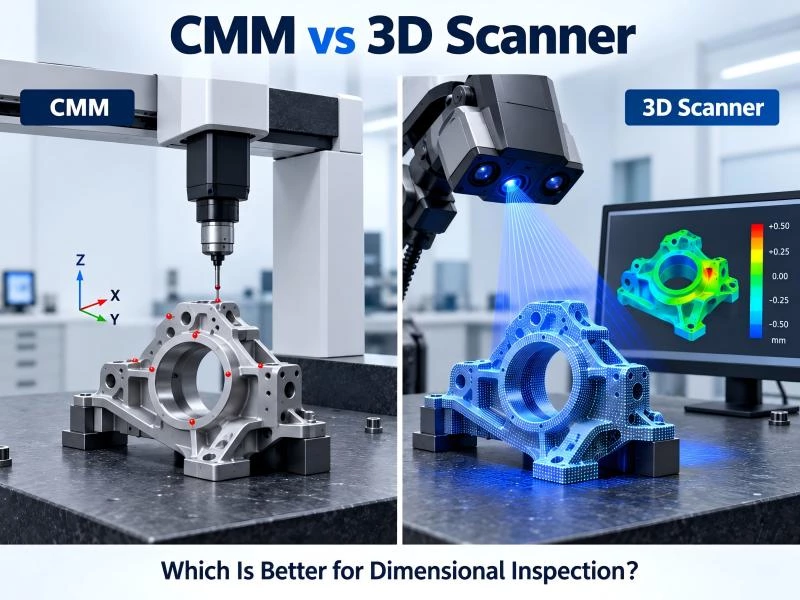
Unlike contact-based measurement tools such as CMMs, structured light scanning is non-contact, fast, and capable of capturing full-field surface data in a single scan.
How Structured Light 3D Scanning Works
The working principle of structured light scanning is based on optical projection and triangulation. The process generally includes four key steps:
Step 1: Pattern Projection
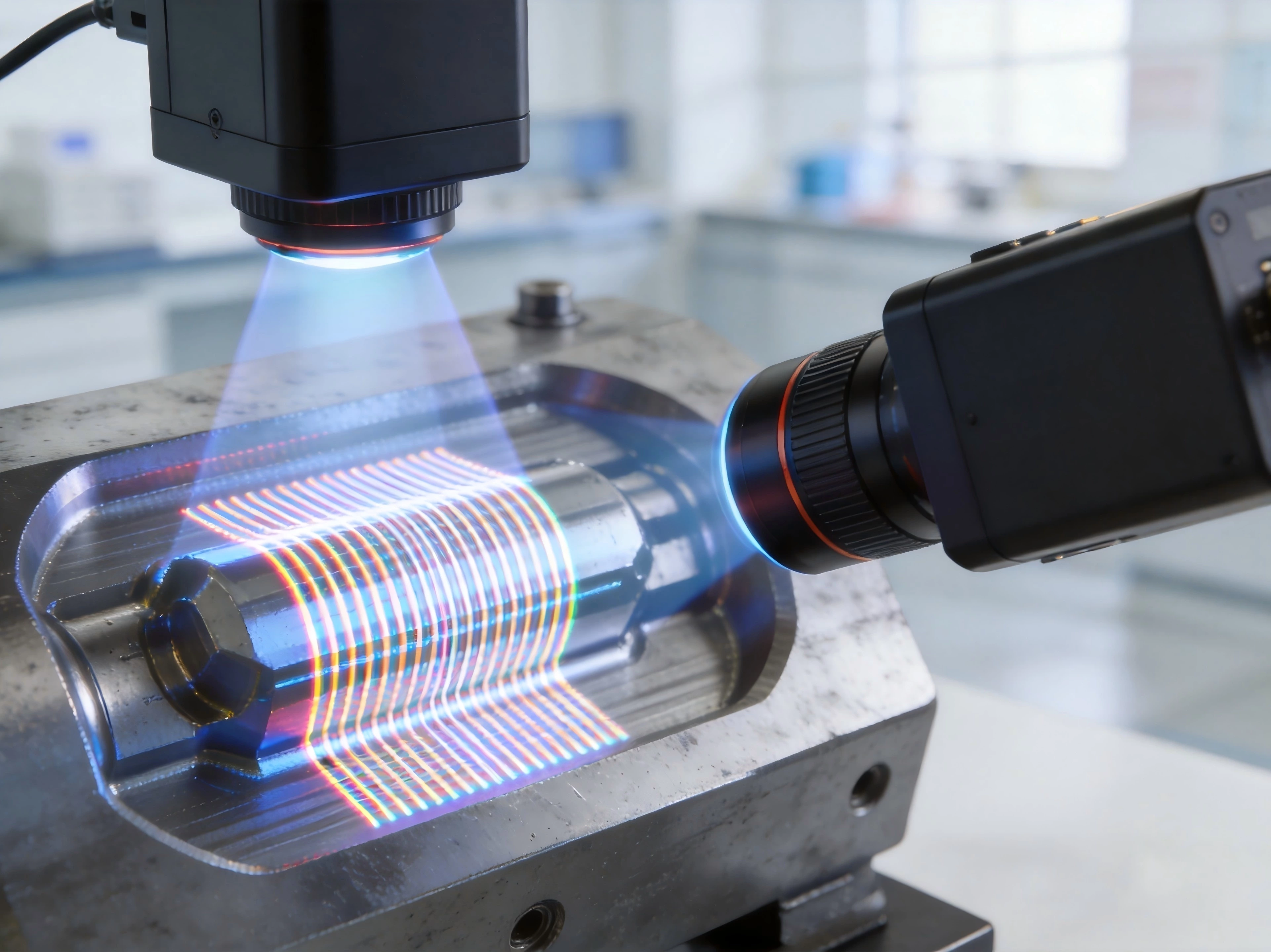
A structured light projector emits coded patterns (usually stripes or grids) onto the surface of an object. These patterns are carefully designed to carry spatial information.
Depending on the system, blue light or white light may be used for improved accuracy and surface adaptability.
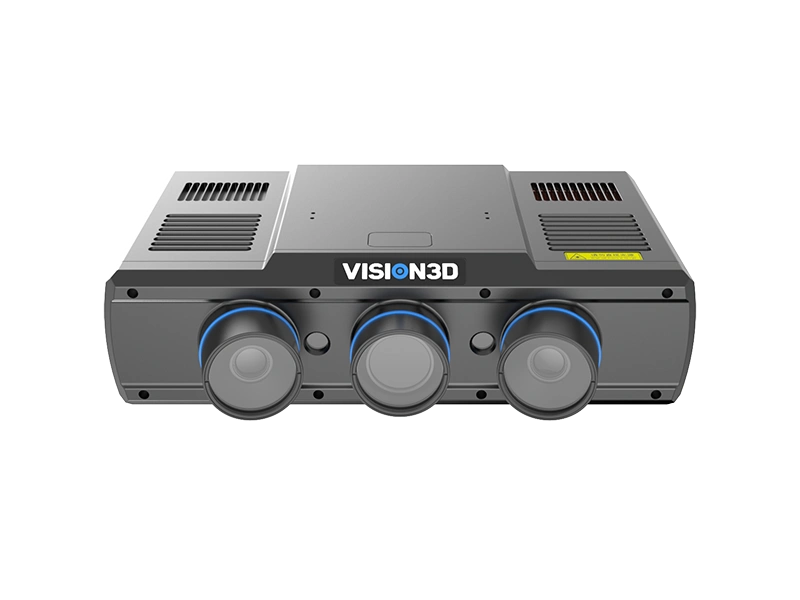
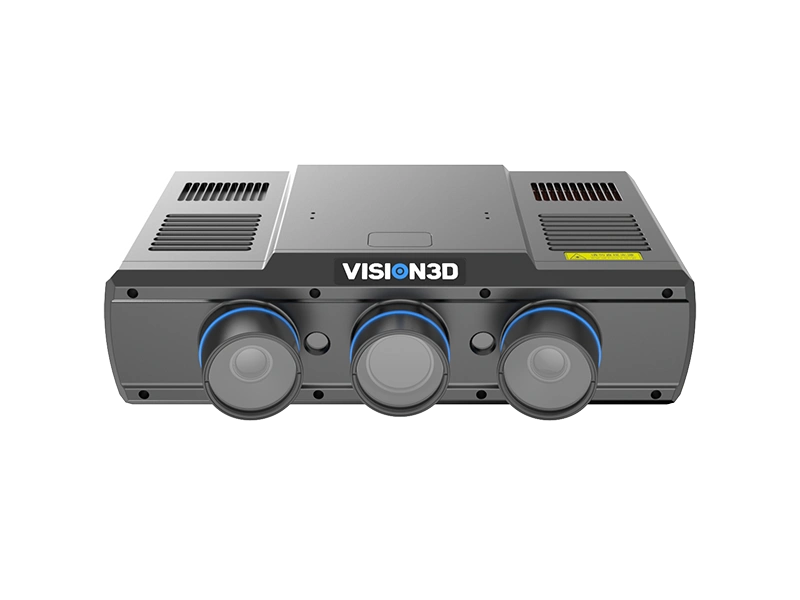
Vision3D’s advanced optical systems such as the PowerScan Series are designed for high-performance structured light scanning in industrial environments.
Step 2: Pattern Deformation Capture
When the light patterns hit the object surface, they deform according to the geometry of the part. Industrial cameras capture these deformations from different angles.
This step is critical because it allows the system to detect surface depth, curvature, edges, and fine details without physical contact.
Step 3: 3D Coordinate Calculation (Triangulation)
The scanner uses triangulation principles to calculate the exact 3D coordinates of each point on the surface.
By combining the known positions of the projector and cameras, the system reconstructs the object geometry in real time.
Step 4: 3D Model Reconstruction
The collected point cloud data is processed into a complete 3D model. This model can then be used for:
- Dimensional inspection
- CAD comparison
- Reverse engineering
- Digital twin creation
Key Components of a Structured Light Scanner
A typical structured light 3D scanning system consists of:
- Light projector (structured pattern generator)
- Industrial-grade cameras
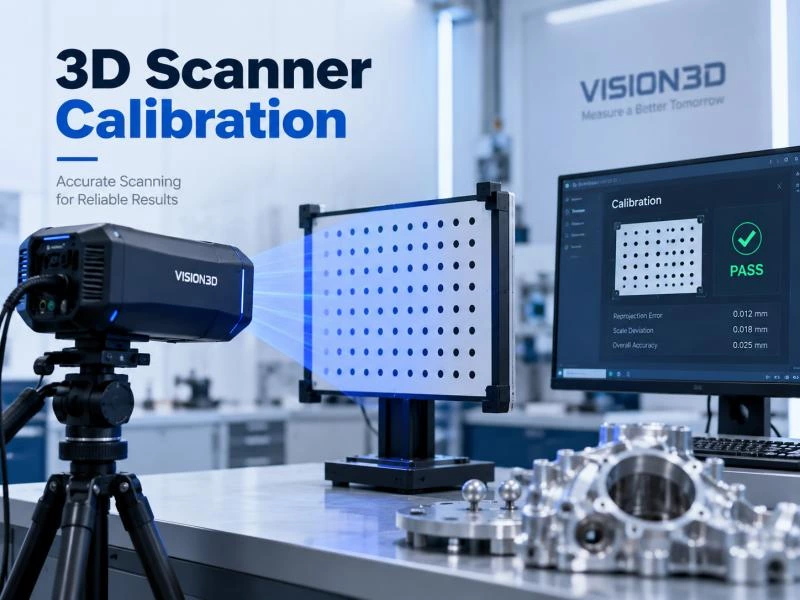
- Calibration system
- 3D reconstruction software
Vision3D integrates both hardware and software into complete inspection solutions, including VisionInspect, DataSight, and iPlan.
Types of Structured Light 3D Scanning Systems
Handheld Structured Light Scanners
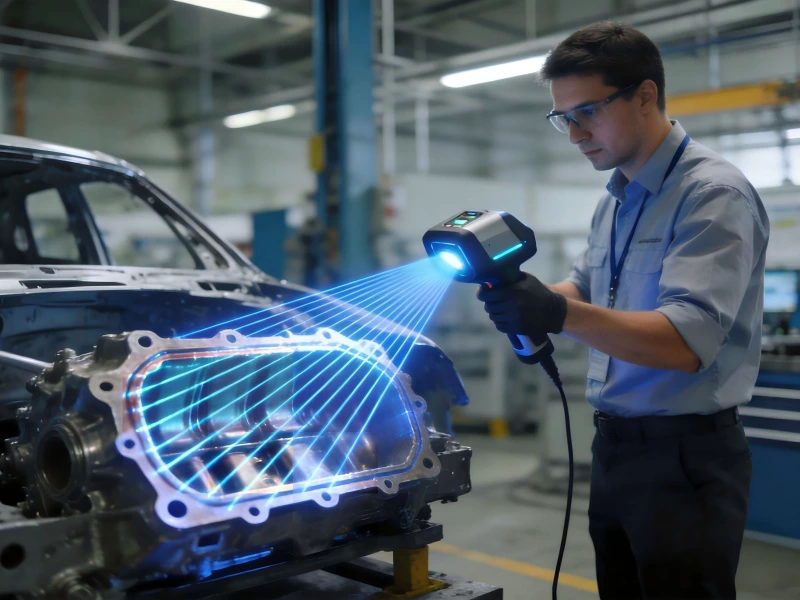
Handheld systems are ideal for flexible inspection tasks and large-part scanning. They are widely used in reverse engineering and field measurement applications.
The VScan M Series, including VScan M11 and VScan M17, provides portable high-precision scanning for industrial use.
Automated Structured Light Systems
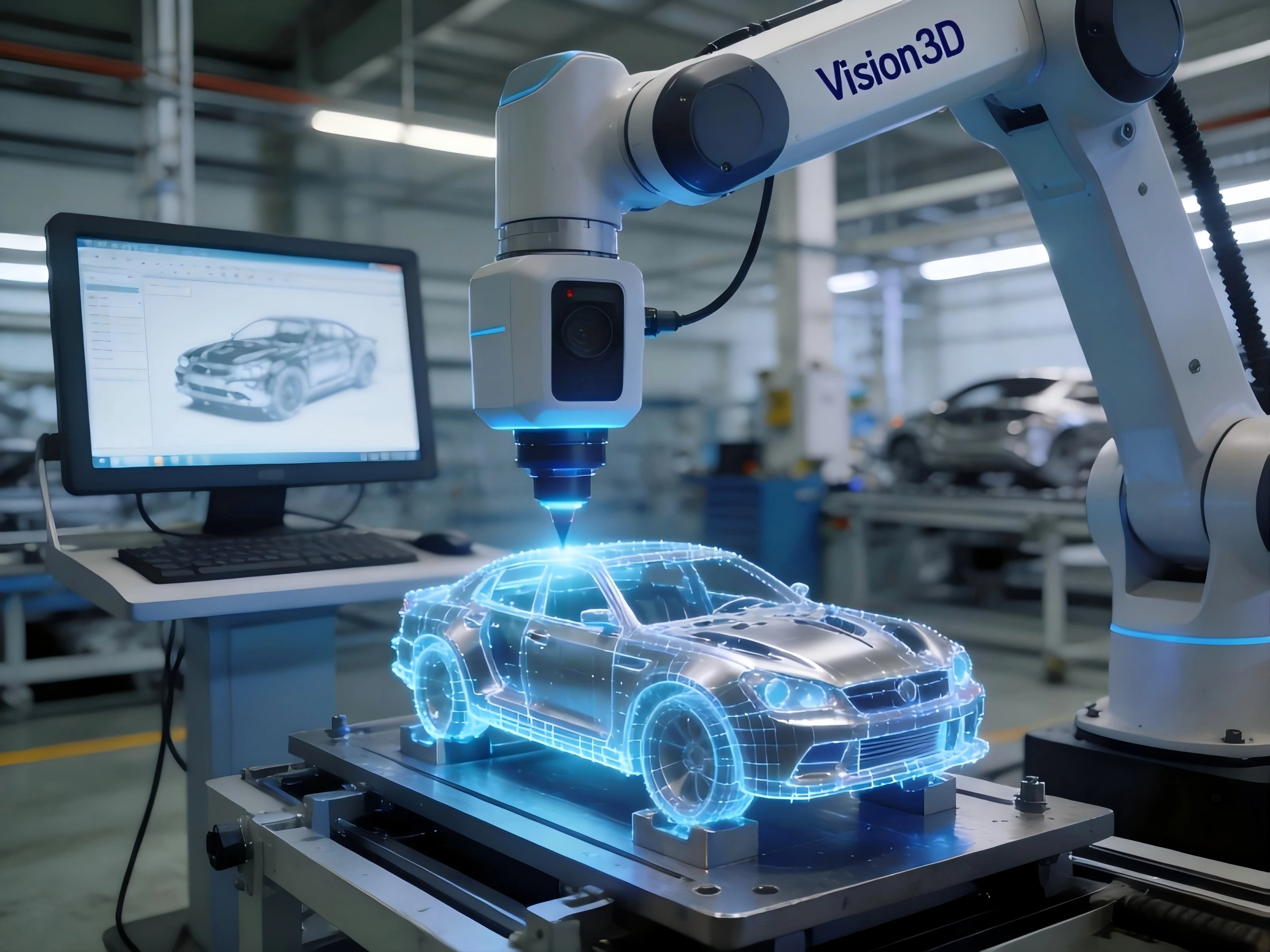
Automated scanning systems are integrated into production lines and robotic platforms for inline inspection and high-throughput quality control.
The AutoScan Series is designed for automated industrial inspection. Models such as AutoScan 500, AutoScan 1000, and AutoScan 5000 support high-speed and high-precision measurement workflows.
High-Precision Metrology Systems
These systems are designed for demanding applications requiring micron-level accuracy, such as aerospace and precision manufacturing.
The VMetric System, including VMetric 20M, provides advanced optical measurement capabilities for industrial metrology.
Structured Light vs Other 3D Scanning Technologies
| Feature | Structured Light | Laser Scanning | Photogrammetry |
|---|---|---|---|
| Accuracy | Very High | High | Medium |
| Speed | Fast | Medium | Slow |
| Surface Detail | Excellent | Good | Medium |
| Industrial Use | Very High | High | Low |
Structured light scanning is often preferred in industrial metrology due to its balance of speed, accuracy, and automation capability.
Advantages of Structured Light 3D Scanning
- High precision measurement
- Fast full-field data capture
- Non-contact inspection
- Strong automation compatibility
- Excellent surface detail reconstruction
- Suitable for CAD comparison and reverse engineering
Limitations of Structured Light Scanning
Although highly effective, structured light scanning may face challenges with:
- Highly reflective surfaces
- Transparent materials
- Strong ambient lighting conditions
- Deep cavity structures
In such cases, hybrid scanning solutions or surface preparation may be required.
Industrial Applications of Structured Light 3D Scanning
Automotive Manufacturing
Used for body-in-white inspection, gap and flush analysis, and stamping part measurement.
Automotive Inspection Solutions
Aerospace Industry
Applied in turbine blade inspection, composite part measurement, and precision assembly verification.
Aerospace Measurement Solutions
Electronics Manufacturing
Used for PCB inspection, micro-component measurement, and connector alignment.
Electronics Inspection Solutions
Rail Transit & Heavy Industry
Supports casting inspection, large equipment measurement, and maintenance workflows.
Structured Light 3D Scanning in Smart Manufacturing
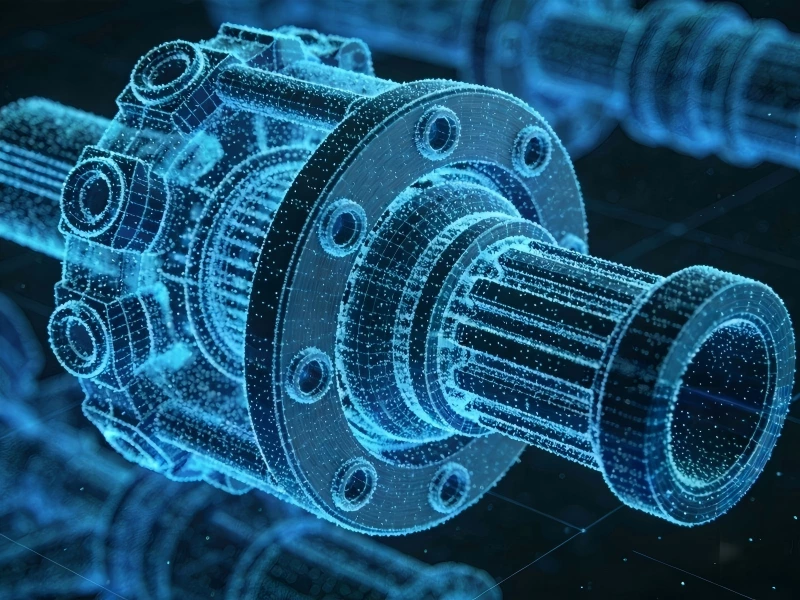
With the rise of Industry 4.0, structured light scanning is increasingly integrated into automated production systems. It enables:
- Inline quality inspection
- Real-time measurement feedback
- Digital twin modeling
- AI-based defect detection
These capabilities make it a core technology for smart factories and advanced manufacturing systems.
Conclusion
Structured light 3D scanning is a powerful industrial measurement technology that enables fast, accurate, and non-contact digitalization of physical objects. It plays a critical role in modern manufacturing by supporting quality inspection, reverse engineering, and automated production systems.
With solutions ranging from handheld scanners to fully automated inspection systems, Vision3D provides complete structured light scanning and metrology solutions for automotive, aerospace, electronics, and heavy industry applications.