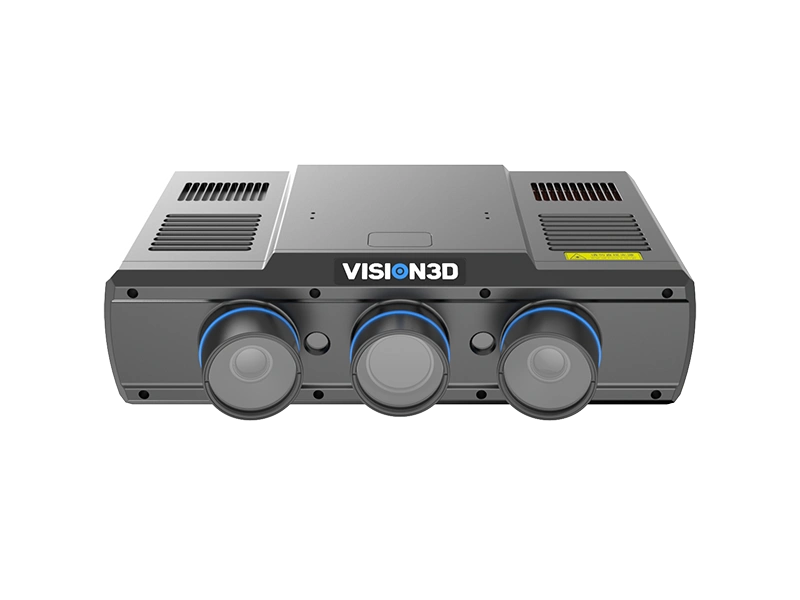
Industrial 3D Laser Scanner Buyer’s Guide for Manufacturing and Inspection
Industrial manufacturers are rapidly adopting 3D laser scanning technology to improve inspection accuracy, accelerate reverse engineering, and optimize production efficiency. Compared with traditional manual measurement methods, industrial 3D scanners provide faster data acquisition, higher precision, and more flexible workflows for modern manufacturing environments.
From automotive body inspection to aerospace component analysis, industrial 3D scanners are now widely used in quality control, product development, tooling validation, and digital manufacturing. Advanced metrology-grade systems can capture millions of points per second while maintaining micron-level accuracy for complex industrial parts.
Why Industrial Manufacturers Are Using 3D Laser Scanners
Industrial 3D scanning technology has become an essential tool for manufacturers that require accurate and efficient digital measurement solutions.
- Faster inspection compared with traditional CMM measurement
- High-precision dimensional analysis
- Portable measurement on the shop floor
- Improved reverse engineering workflows
- Real-time quality control
- Reduced production downtime
- Better compatibility with automation systems
Modern industrial scanners are increasingly used in smart manufacturing and Industry 4.0 environments where rapid digital inspection and automated data collection are critical.
What Is an Industrial 3D Laser Scanner
An industrial 3D laser scanner is a high-precision optical measurement device used to capture the geometry of physical objects and convert them into digital 3D models.
Unlike consumer-grade scanners, industrial systems are designed for:
- Metrology-grade accuracy
- Large-volume measurement
- Complex surface scanning
- Production-line inspection
- Engineering and manufacturing applications
Industrial 3D scanners are commonly available in several forms:
Handheld 3D Laser Scanners
Portable handheld scanners allow operators to scan parts directly on the production floor. These systems are ideal for large components, automotive inspection, and reverse engineering workflows.
Recommended model
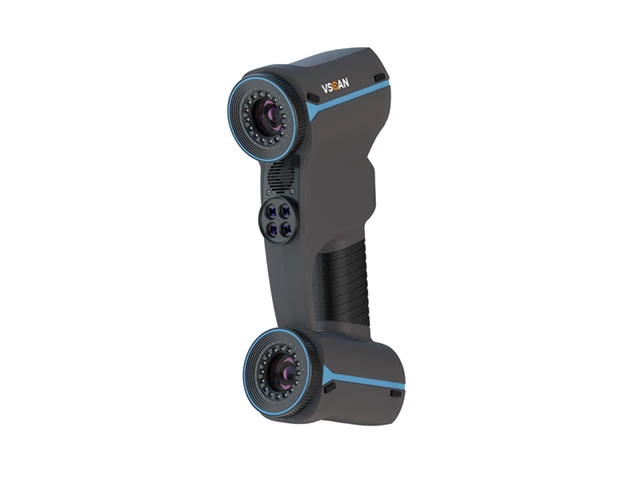 VScan M11
Professional Handheld 3D Scanner
VScan M17
High-Efficiency Handheld 3D Scanner
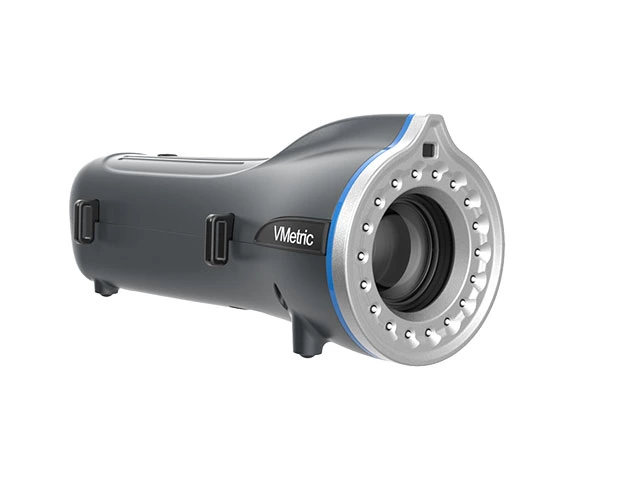 VMetric 20M
Handheld Global 3D Photogrammetry
Blue Laser 3D Scanners
Blue laser technology improves scanning performance on dark, reflective, and metallic surfaces while reducing environmental light interference.
Recommended model
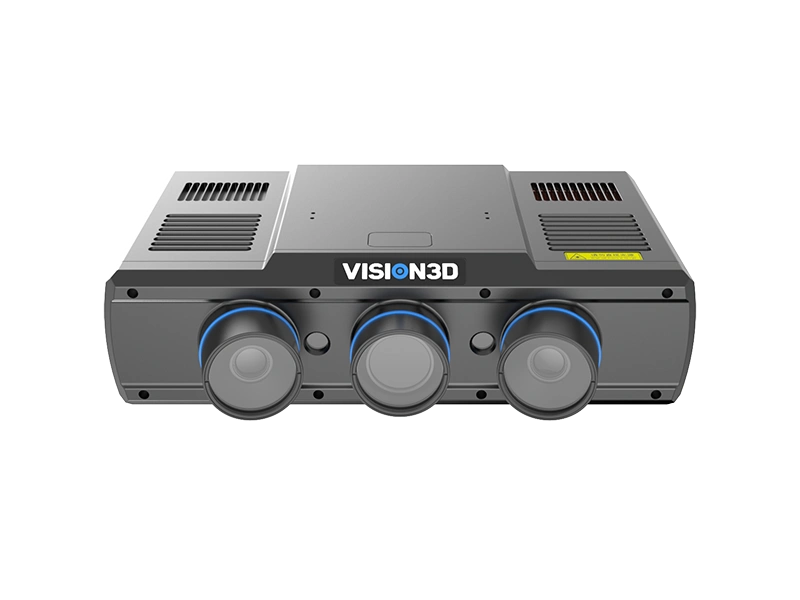 PowerScan 5M Pro
PowerScan 12M Pro
 PowerScan-H
 PowerScan-T
Optical Tracking 3D Systems
Optical tracking systems combine scanners with external tracking devices to improve accuracy when scanning large objects such as vehicle bodies, molds, and industrial machinery.
Automated 3D Scanning Systems
Automated systems integrate robotic inspection and batch measurement for high-volume manufacturing applications.
Recommended model
 AutoScan 500
 AutoScan 1000 Series
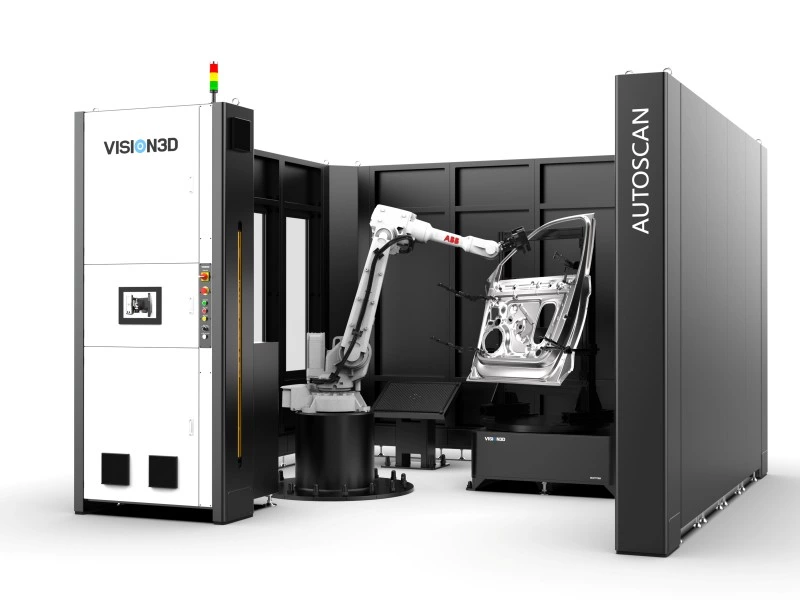 AutoScan 2000 Series
 AutoScan 5000 Series
 AutoScan-M

AutoScan-H
How 3D Laser Scanners Work
Industrial 3D scanners use optical measurement technologies to capture millions of surface points and generate highly accurate digital models.
Laser Triangulation Technology
Most industrial laser scanners use laser triangulation principles.
The scanner projects laser lines onto the object surface while cameras calculate spatial coordinates based on triangulation geometry.
This process enables highly accurate surface reconstruction for dimensional inspection and reverse engineering applications.
Blue Laser Technology
Blue laser scanners use shorter wavelengths that improve measurement stability and reduce interference from ambient lighting.
This technology is particularly effective for:
- Reflective metal surfaces
- Dark-colored components
- Automotive body panels
- Precision-machined parts
Marker-Based Alignment
Many industrial systems use positioning markers to improve scan alignment accuracy during handheld scanning operations.
Marker-based tracking is commonly used for:
- Large-volume scanning
- Automotive inspection
- Mold measurement
- Heavy equipment inspection
Real-Time Mesh Generation
Modern scanning software can generate mesh data in real time, allowing engineers to quickly validate scan quality and accelerate downstream CAD workflows.
Industrial Applications of 3D Laser Scanners
Industrial 3D scanning technology is widely used across manufacturing industries.
Automotive Inspection
- Gap and flush analysis
- Body-in-white inspection
- Sheet metal deformation analysis
- Fixture verification
- Automotive aftermarket modification
High-speed handheld scanners improve inspection efficiency for large automotive assemblies.
Aerospace Manufacturing
- Turbine blade inspection
- Composite part validation
- Structural analysis
- Maintenance and repair workflows
High-accuracy optical measurement is critical for aerospace quality control.
Reverse Engineering
Reverse engineering is one of the fastest-growing industrial scanning applications.
Industrial scanners help engineers:
- Reconstruct legacy components
- Generate CAD models
- Improve product redesign
- Create digital archives
Large-Part Measurement
Large-volume scanning systems are commonly used for:
- Industrial machinery
- Rail transportation equipment
- Energy equipment
- Construction machinery
- Mold inspection
Portable systems provide flexible measurement directly on-site.
How to Choose the Best Industrial 3D Scanner
Selecting the right industrial scanner depends on application requirements, measurement accuracy, and workflow compatibility.
Accuracy and Repeatability
Accuracy is one of the most important purchasing factors.
- 0.020 mm accuracy
- Repeatable measurements
- ISO-compliant inspection workflows
Scanning Speed
High-speed scanners improve productivity by capturing millions of measurement points per second.
Faster scanning is especially important for:
- Large-part inspection
- Production-line measurement
- Automated quality control
Portability
Portable handheld scanners are ideal for:
- On-site inspection
- Shop floor environments
- Large components
- Hard-to-reach areas
Portable systems reduce the need to transport heavy parts to fixed CMM equipment.
Software Compatibility
Industrial users should evaluate software compatibility carefully.
Important software features include:
- Scan-to-CAD workflows
- STL and mesh export
- GD&T inspection
- Real-time alignment
- CAD comparison
- Reporting automation
Scanning Difficult Surfaces
Some surfaces are more challenging to scan than others.
Industrial scanners should handle:
- Reflective surfaces
- Dark materials
- Shiny metals
- Complex geometries
Blue laser systems generally perform better under these conditions.
Structured Light vs Laser 3D Scanner
| Feature | Laser 3D Scanner | Structured Light Scanner |
|---|---|---|
| Accuracy | High | High |
| Large-Part Scanning | Excellent | Moderate |
| Outdoor Performance | Better | More sensitive |
| Reflective Surface Handling | Better | Limited |
| Scan Speed | Very fast | Fast |
| Portability | Excellent | Good |
| Industrial Inspection | Ideal | Suitable |
Common Challenges in Industrial 3D Scanning

Reflective and Dark Surfaces
Highly reflective metals and dark materials can affect scan quality.
Blue laser technology helps improve measurement reliability on difficult surfaces.
Large Object Alignment
Large-volume scanning requires stable alignment and tracking systems to maintain measurement accuracy.
Marker positioning and optical tracking are commonly used solutions.
Environmental Conditions
Factory vibration, ambient lighting, and temperature changes may affect scanning performance.
Industrial-grade scanners are designed to maintain stability in demanding manufacturing environments.
Data Processing Requirements
High-resolution scanning generates large datasets that require powerful software and efficient mesh processing capabilities.
Efficient software workflows significantly improve engineering productivity.
Why Choose Vision3D Industrial 3D Scanners
Vision3D provides industrial 3D scanning solutions designed for manufacturing, quality inspection, and reverse engineering applications.
Key advantages include:
- Metrology-grade scanning accuracy
- Portable handheld scanning systems
- High-speed blue laser technology
- Large-volume measurement capability
- Industrial automation integration
- Scan-to-CAD workflow compatibility
Vision3D solutions are suitable for industries including automotive manufacturing, aerospace, rail transportation, mold production, and industrial equipment inspection.
Conclusion
Industrial 3D laser scanners have become essential tools for modern manufacturing, quality inspection, and reverse engineering.
Choosing the right system requires careful evaluation of:
- Accuracy requirements
- Scanning speed
- Portability
- Software ecosystem
- Surface compatibility
- Automation needs
As manufacturing continues moving toward digitalization and smart factory workflows, industrial 3D scanning technology will play an increasingly important role in improving efficiency, reducing inspection time, and enabling high-precision production processes.
FAQ
What is the difference between a laser 3D scanner and a structured light scanner?
Laser scanners generally perform better for large-volume industrial scanning and reflective surfaces, while structured light scanners are often used for smaller precision applications.
How accurate are industrial 3D scanners?
Metrology-grade industrial scanners can achieve accuracy levels as high as 0.020 mm depending on the system and application.
Can a handheld 3D scanner replace a CMM?
Handheld scanners can significantly improve inspection efficiency and flexibility, but CMM systems may still be preferred for certain ultra-high-precision measurement applications.
What industries use industrial 3D scanners?
Common industries include automotive, aerospace, energy, rail transportation, heavy equipment manufacturing, and industrial automation.
What is the best 3D scanner for reverse engineering?
The best reverse engineering scanner depends on part size, accuracy requirements, material type, and software workflow compatibility. Portable metrology-grade laser scanners are commonly used for industrial reverse engineering.