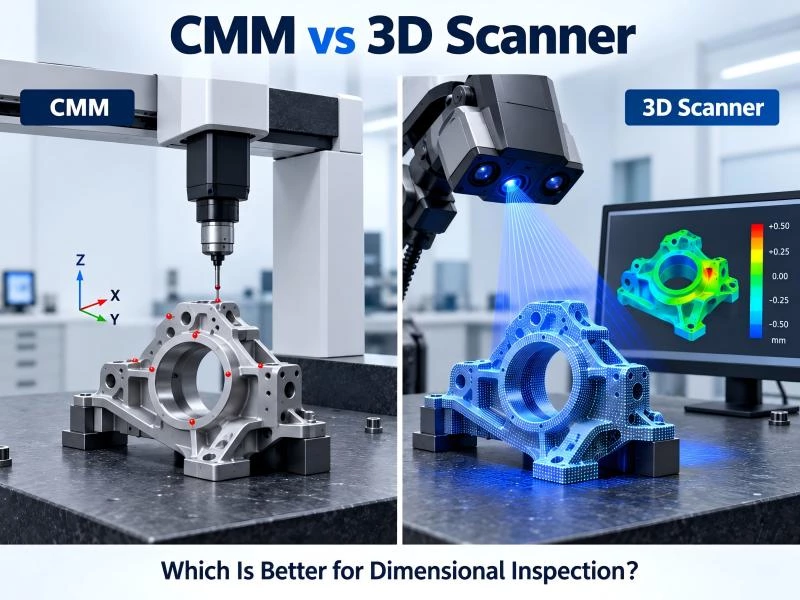
Handheld vs Automated 3D Scanner: Which Is Better for Industrial Inspection?
When manufacturers start evaluating 3D scanning solutions, the primary question is rarely about technology itself — it’s about the workflow and how inspection is integrated into your production process.
Do you need a flexible scanner that can handle different parts daily?
Or do you need a system that works continuously, with minimal human involvement?
That’s where the real difference between handheld and automated 3D scanners begins.
The Real Difference Is in the Workflow, Not Just the Hardware
Both handheld and automated systems can deliver accurate 3D data, but they solve very different problems in industrial applications.
- A handheld scanner is a tool that provides flexibility
- An automated system is part of an integrated production process
Choosing between these solutions is about more than just equipment — it’s about shaping how inspections will happen in your factory and optimizing your production workflow.
When Handheld 3D Scanners Are the Right Choice
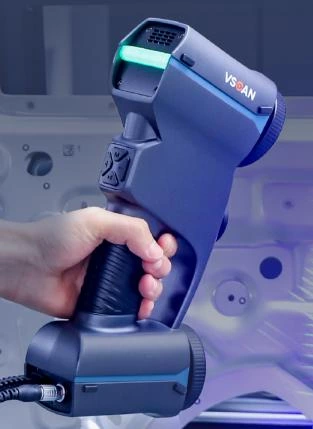
Handheld scanners excel in flexibility.
They are the ideal choice when:
- Different parts need scanning frequently
- No fixed inspection setup is in place
- You need to scan large or difficult-to-reach components
- Your team works across multiple locations or on-site
These scenarios are typical in:
- Maintenance and repair work
- Reverse engineering
- Prototype validation
- Low-volume production inspection
The trade-off is simple: You gain flexibility, but it requires more from the operator to ensure accuracy.
Where Automated 3D Scanning Systems Excel
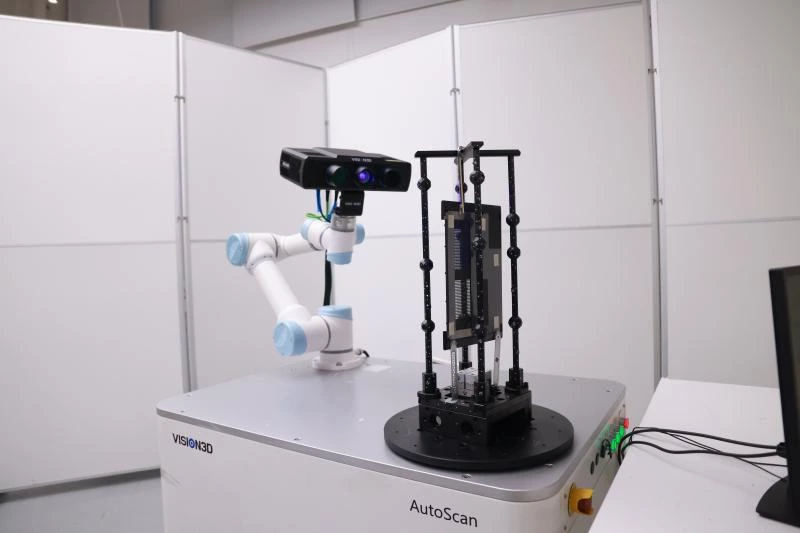
Automated systems aren’t about flexibility — they’re all about consistency and speed.
They are ideal for situations where:
- The same part needs to be inspected repeatedly
- Speed is critical, and adaptability isn’t as important
- Consistent results are required across large batches
Common use cases for automated systems include:
- Production line inspection
- Inline quality control
- Automotive body inspection (BIW, gap & flush measurement)
- High-volume manufacturing environments
In these cases, manual scanning simply can’t match the efficiency and consistency of automation.
Automation doesn’t just make things faster — it removes the variability that human operators introduce, ensuring high repeatability.
Accuracy: More Than Just a Spec Sheet Number
Many people assume that handheld scanners are less accurate than automated systems. That’s not always the case.
The real difference is stability.
- Handheld scanning: Accuracy depends on how the scanner is used and how stable the operator keeps it during scanning.
- Automated scanning: Accuracy is highly repeatable, as the scanning process is controlled by precise robotics and predefined setups.
If your process involves consistent measurement across hundreds or thousands of parts, automated systems typically perform better over time, even if the nominal accuracy between both options is similar.
Cost: It's More Than Just the Initial Investment
This is where many decisions go wrong. While handheld scanners may seem cheaper upfront and automated systems appear expensive, the real cost is measured by:
- Labor time
- Time per inspection
- Rework due to inconsistencies in the manual inspection process
If you’re inspecting parts occasionally or for low-volume production, handheld scanners offer more cost-effective solutions.
However, if you’re inspecting parts continuously every day, automation quickly pays for itself by reducing labor and time spent on each inspection.
A Practical Way to Decide
Instead of only comparing specifications, ask yourself the following:
- Are we inspecting different parts daily? → Handheld scanner
- Are we inspecting the same part repeatedly? → Automated system
- Do we need mobility? → Handheld scanner
- Do we need integration with production lines? → Automated system
Integrating Both Systems for Maximum Efficiency
In many industrial settings, a combination of handheld and automated systems offers the best of both worlds:
- Handheld scanners provide flexibility for complex parts and fieldwork
- Automated systems handle high-volume production and inline inspections with consistency
This combination enables manufacturers to balance speed, accuracy, and adaptability to meet varying inspection needs.
Final Thoughts
There is no one-size-fits-all solution when it comes to choosing between handheld and automated 3D scanners.
The best choice depends on how your inspection process operates, not just what you are measuring.
If your priority is flexibility and mobility, a handheld scanner is the best choice.
If consistency, speed, and efficiency are paramount, an automated 3D inspection system is the better direction.
And if your production needs are diverse, you will likely find the most success with both handheld and automated 3D scanning systems working together.