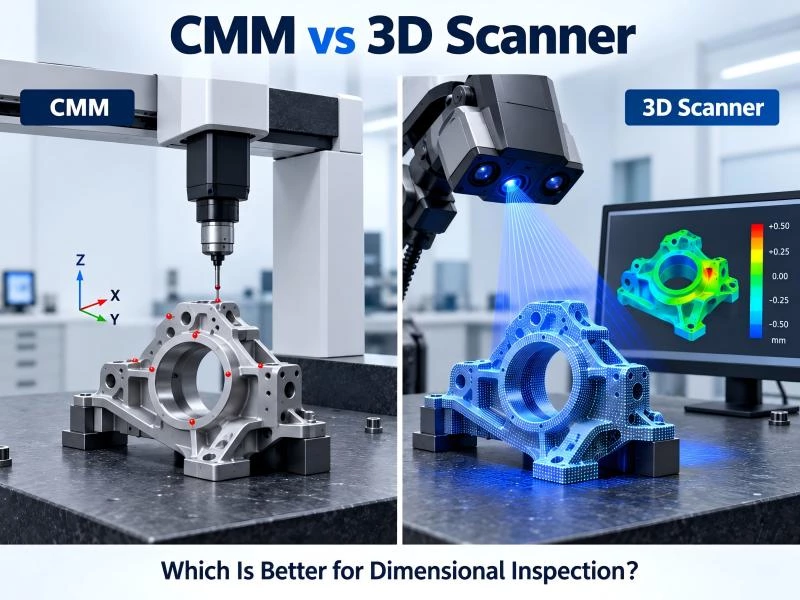
Handheld vs Blue Light 3D Scanner: Accuracy, Speed, and Best Applications
In industrial inspection environments, manufacturers often compare handheld 3D scanners and blue light 3D scanners when evaluating accuracy, scanning speed, and production workflow efficiency.
However, scanner accuracy is not as simple as reading a specification sheet. A system may show impressive laboratory data while performing very differently under real manufacturing conditions. Part size, operator movement, surface reflectivity, ambient lighting, temperature variation, and scanning workflow can all affect final measurement quality.
That is why comparing a handheld 3D scanner and a blue light 3D scanner requires more than checking one specification number.
This guide compares accuracy, scanning speed, and best industrial applications for both technologies, helping manufacturers select the right 3D inspection solution for real production environments.
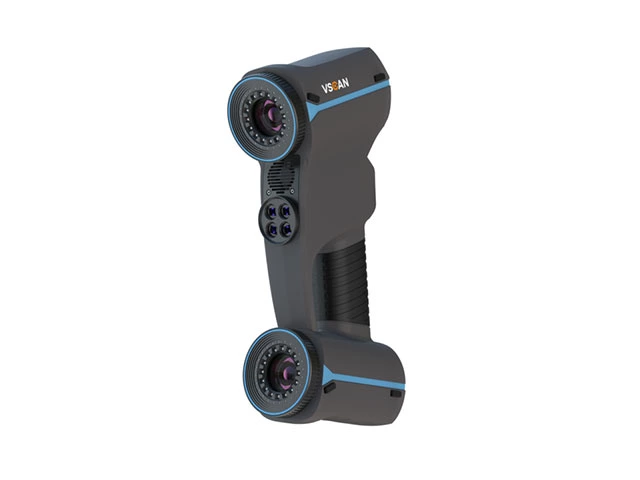
What Is a Handheld 3D Scanner?
A handheld 3D scanner is a portable optical scanning device manually moved around an object while cameras and sensors capture geometry from multiple angles.
Because the scanner moves freely around the part, handheld systems are highly flexible for large objects, complex surfaces, and difficult inspection environments.
Handheld scanning systems are widely used in:
- Large casting inspection
- Automotive body measurement
- Sheet metal inspection
- Tooling and molds
- Reverse engineering workflows
- On-site dimensional verification
- Maintenance and repair applications
The biggest advantage of handheld scanning is portability and practical shop-floor flexibility.
What Is a Blue Light 3D Scanner?
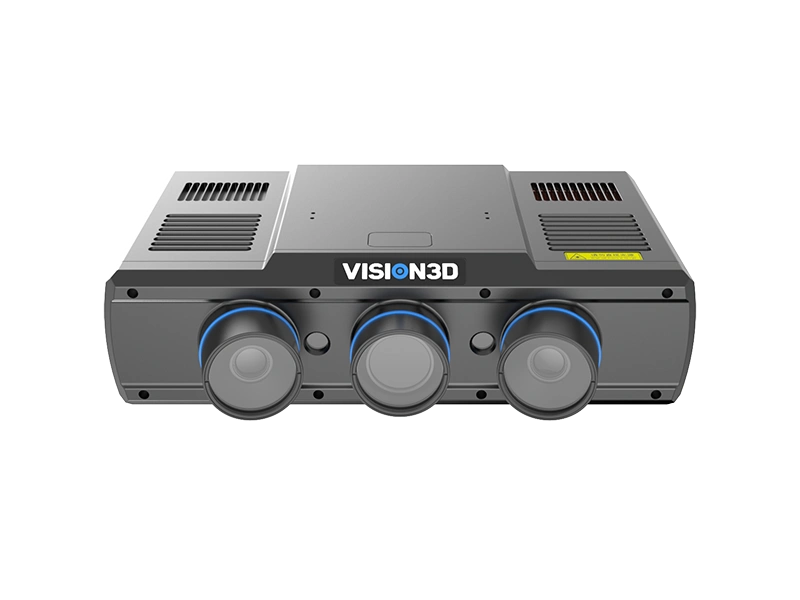
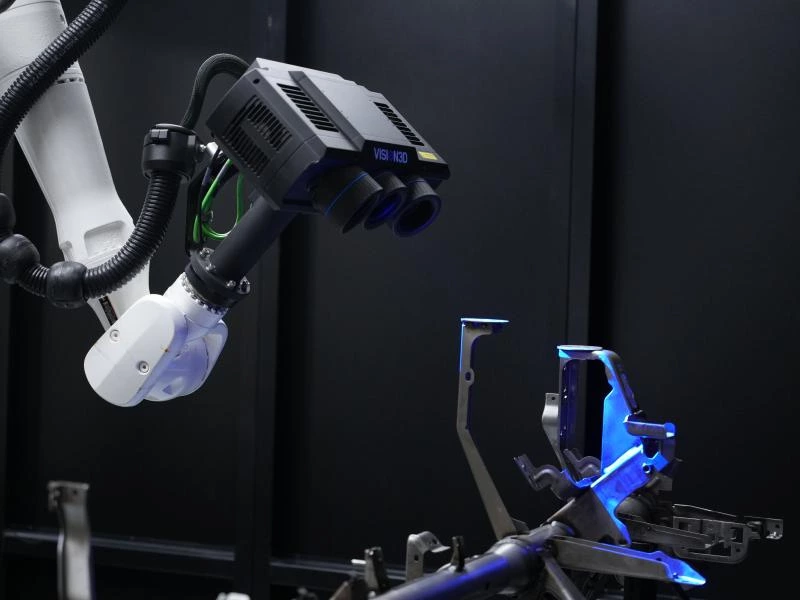
A blue light 3D scanner is a fixed structured light measurement system that projects blue fringe patterns onto an object surface. Industrial cameras analyze pattern deformation to reconstruct highly accurate 3D geometry.
Blue light wavelength helps reduce ambient light interference and improves measurement stability during precision dimensional inspection.
Blue light 3D scanners are commonly used for:
- Precision dimensional inspection
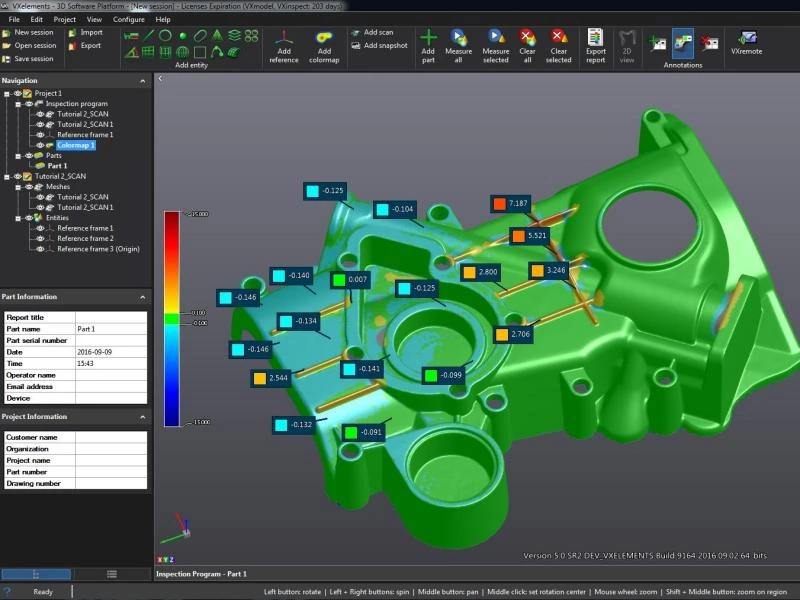
- CAD deviation analysis
- First article inspection
- Automated metrology cells
- Batch quality verification
- Small and medium precision components
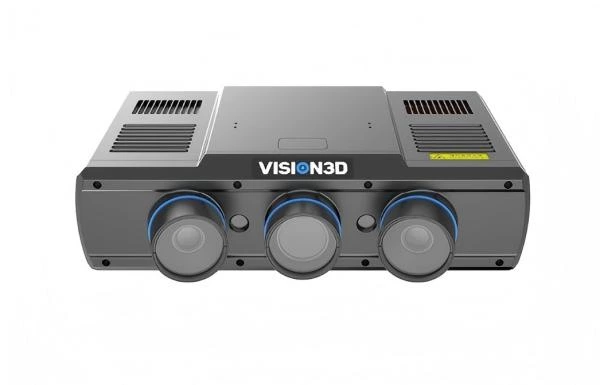
These systems are widely used in automotive manufacturing, aerospace, electronics, precision machining, and industrial quality control applications.
What Does 3D Scanner Accuracy Really Mean?
Many buyers focus only on a single accuracy specification, but industrial 3D scanning accuracy usually includes several different performance factors.
- Absolute accuracy – how closely measurement results match the true dimension
- Repeatability – whether repeated scans generate stable results
- Resolution – ability to capture small features and edge details
- Volumetric accuracy – performance across larger measurement areas
- Alignment stability – consistency after multiple scan merges
A scanner may perform extremely well in one category while showing limitations in another. Real inspection accuracy depends not only on hardware, but also on scanning workflow, operator method, and manufacturing conditions.
Why Blue Light 3D Scanners Usually Deliver Higher Accuracy
For small and medium precision components under controlled inspection conditions, blue light 3D scanners usually deliver higher overall accuracy and repeatability.
Under stable metrology conditions, blue light systems can achieve metrology-grade accuracy around 0.01 mm, especially for precision-machined and injection-molded components.
Several factors contribute to this higher accuracy:
- Fixed camera positioning
- Stable measuring distance
- Structured light full-field measurement
- Reduced operator influence
- Stable calibration geometry
- Strong fine-feature capture capability
Because the optical setup remains fixed during measurement, blue light systems often provide more stable dimensional consistency during repeat production inspection.
Why Handheld 3D Scanners Are Better for Large Objects
While blue light systems often provide higher precision for smaller components, handheld 3D scanners usually perform better for larger objects and flexible inspection workflows.
In many manufacturing environments, full inspection coverage and scanning accessibility are more important than ultra-fine tolerance control.
Handheld scanners are especially useful for:
- Large welded structures
- Vehicle bodies and sheet metal assemblies
- Heavy castings
- Field inspection tasks
- Large mold adjustment work
- Reverse engineering of oversized parts
Because operators can move freely around the part, handheld systems often reduce scanning time for large or difficult-to-access components.
Industrial Applications: Which Scanner Fits Different Manufacturing Tasks?
| Industrial Application | Recommended Scanner | Reason |
|---|---|---|
| Automotive body inspection | Handheld 3D Scanner | Better coverage for large surfaces |
| Precision machined components | Blue Light 3D Scanner | Higher repeatability and fine-detail capture |
| Injection molded parts | Blue Light 3D Scanner | Stable dimensional verification |
| Large castings | Handheld 3D Scanner | Flexible scanning access |
| Aerospace precision parts | Blue Light 3D Scanner | High measurement consistency |
| Reverse engineering projects | Handheld 3D Scanner | Portable scanning workflow |
| Automated quality inspection | Blue Light 3D Scanner | Suitable for automated metrology cells |
What Affects Real-World 3D Scanning Accuracy?
Actual scanning accuracy on the production floor is influenced by many environmental and workflow factors.
- Surface reflectivity
- Ambient lighting conditions
- Part vibration
- Temperature fluctuation
- Operator movement
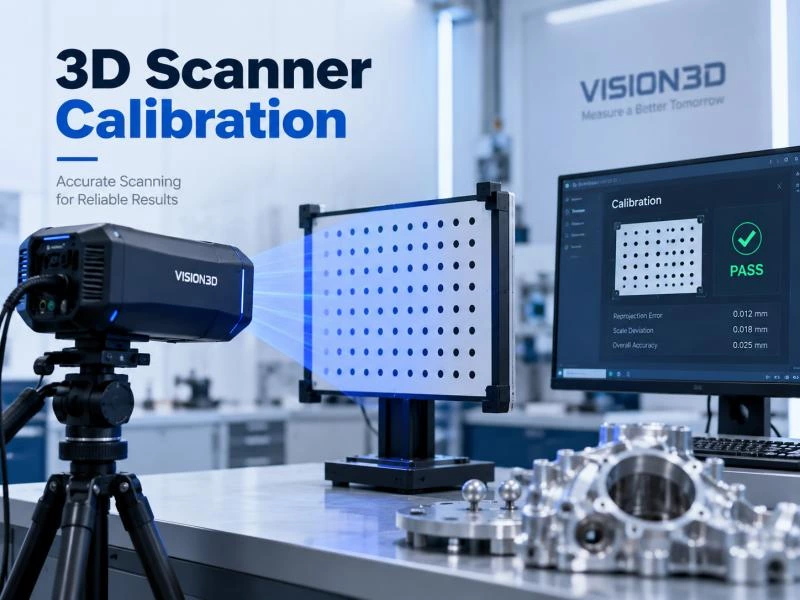
- Calibration frequency
- Part positioning stability
Reflective aluminum surfaces, black coatings, and unstable shop-floor conditions can all reduce point-cloud quality and affect final dimensional analysis.
This is why manufacturers should evaluate scanning performance under real production conditions rather than relying only on laboratory specifications.
Accuracy and Speed Comparison
| Category | Handheld 3D Scanner | Blue Light 3D Scanner |
|---|---|---|
| Absolute Accuracy | Good to high | Very high |
| Repeatability | Depends on operator workflow | Excellent |
| Fine Detail Capture | Good | Excellent |
| Large Part Efficiency | Excellent | Moderate |
| Portability | Excellent | Low |
| Automated Inspection Integration | Moderate | Excellent |
| Batch Inspection Consistency | Moderate | Excellent |
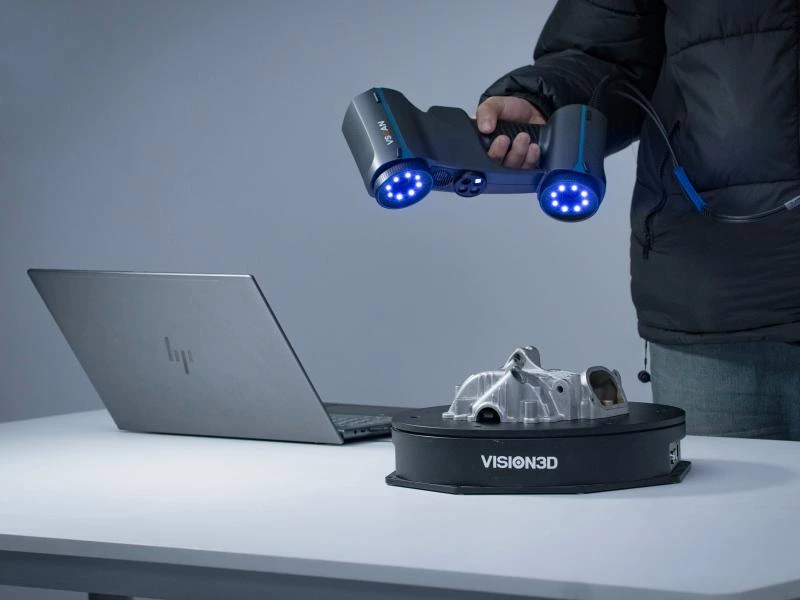
Can Manufacturers Use Both Systems?
Yes. Many manufacturers combine both technologies to improve inspection flexibility and production efficiency.
- Use handheld scanning for large assemblies, field inspection, and flexible workflows
- Use blue light scanning for precision dimensional verification and repeat production inspection
This combined workflow helps balance portability, scanning speed, inspection coverage, and metrology-grade accuracy.
Final Recommendation
If your priority is maximum dimensional precision for small and medium components, blue light 3D scanning is usually the stronger option.
If your priority is portability, scanning speed, and full coverage of large objects, handheld 3D scanners often deliver better long-term value.
For manufacturers handling both large assemblies and precision components, combining both technologies can provide a more efficient and scalable inspection workflow.
The right solution should be selected based on part geometry, tolerance requirements, inspection frequency, and actual manufacturing workflow rather than specification numbers alone.
FAQ
Which scanner is more accurate for industrial inspection?
Blue light 3D scanners usually provide higher repeatability and dimensional accuracy for small and medium precision components under controlled inspection conditions.
Are blue light 3D scanners better for automotive inspection?
Blue light systems are commonly used for precision automotive component inspection and automated quality verification, while handheld scanners are often preferred for full vehicle body measurement.
Can handheld 3D scanners inspect large castings?
Yes. Handheld scanners are widely used for large castings, welded structures, and oversized industrial components because of their portability and flexible scanning access.
What affects 3D scanning accuracy?
Surface reflectivity, ambient lighting, operator movement, temperature fluctuation, calibration stability, and scanning workflow can all affect final measurement accuracy.
Which scanner is better for reverse engineering?
Handheld 3D scanners are often preferred for reverse engineering large or complex parts because they provide greater scanning flexibility and accessibility.
Looking for the Right Scanner?
Explore professional 3D scanning solutions for automotive, aerospace, electronics, tooling, rail transit, and industrial manufacturing applications.